
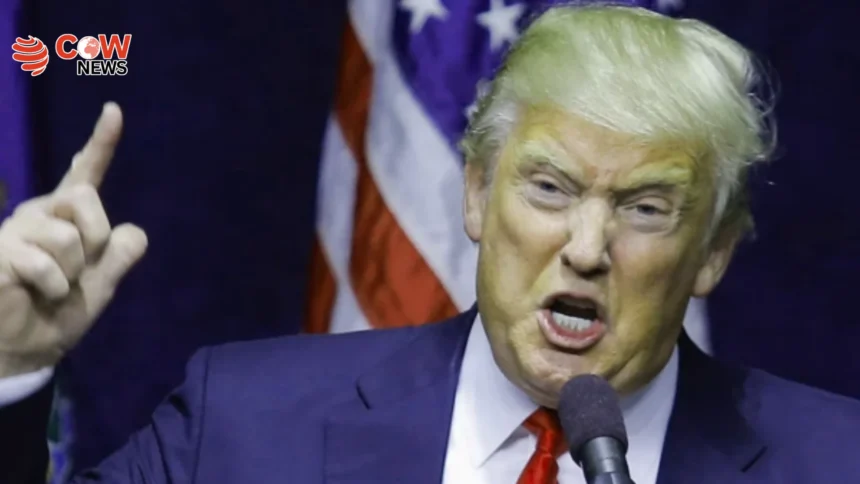
WASHINGTON, (The COW News Digital) U.S. President Donald Trump has expressed growing frustration over the ongoing blockade of the Strait of Hormuz, signaling that America’s patience with Iran is nearing its limit. Speaking from Air Force One during his return from Beijing, Trump indicated that military action could be resumed if diplomatic efforts fail.
According to reports, Trump claimed that Chinese President Xi Jinping has agreed, in principle, to help reopen the vital shipping route. However, he noted that China has not committed to any direct intervention. Trump also mentioned that he is considering easing U.S. sanctions on Chinese companies importing Iranian oil, a move that could have significant implications given China’s status as Iran’s largest crude oil buyer.
“When you ask for favors, you must be prepared to reciprocate,” Trump said when asked if Xi had promised to pressure Tehran. “I am not asking for favors; I am simply stating the facts.”
The president’s remarks come after Washington suspended an earlier planned military strike on Iran last month but continued a naval blockade under Operation Project Freedom. Tehran, in turn, has maintained that the Strait of Hormuz will remain restricted until the U.S. lifts its blockade.
Trump warned that if Iran refuses to engage in negotiations, “our patience will end,” leaving the door open for renewed U.S. military operations. Analysts say the escalating rhetoric highlights the fragile balance in one of the world’s most critical oil shipping lanes.
The Strait of Hormuz, a narrow waterway connecting the Persian Gulf with the Gulf of Oman, sees nearly one-fifth of global oil shipments pass through its waters. Any prolonged closure could have severe consequences for global energy markets, intensifying pressure on policymakers in Washington, Tehran, and Beijing.
Observers also point out that while China has significant economic interests in Iran, it has historically sought to avoid direct military confrontation, making its role in mediating the situation uncertain.
Read more
- Pakistan, Taliban, and Afghanistan: The Complex Triangle of Influence
- China Urges Global Support for Sustainable Sudan Solution
The unfolding situation is being closely monitored by international stakeholders, including Europe and Gulf nations, as the world watches for any signs of escalation or diplomatic breakthrough.
With tensions mounting, Trump’s administration appears ready to balance diplomacy with the potential for force, underscoring the high stakes involved in the geopolitics of the Middle East.