

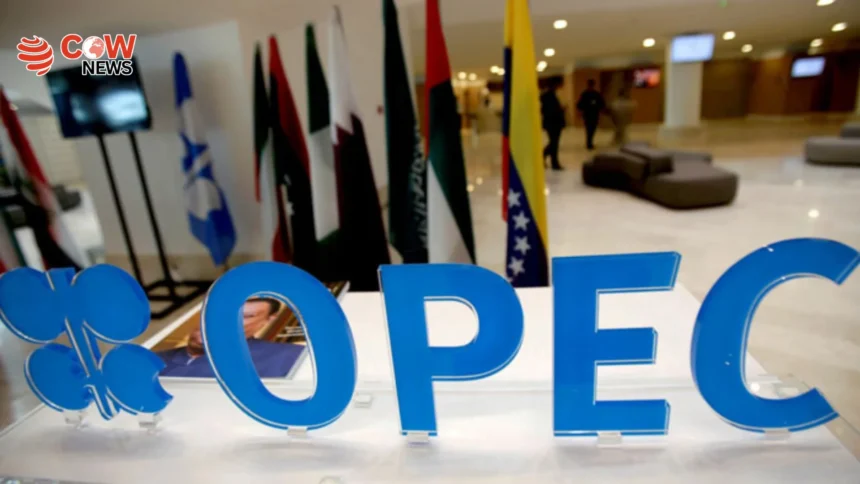
World ( The cow news digital ) The United Arab Emirates (UAE) has announced its decision to withdraw from the Organization of the Petroleum Exporting Countries (OPEC) and its allied grouping OPEC+, marking a significant shift in global energy politics, according to official reports.
The announcement, made through the UAE state news agency, stated that the decision will come into effect from May 1, 2026. Authorities indicated that the move is aimed at granting the country greater autonomy over its oil production and export policies.
Officials in Abu Dhabi emphasized that the UAE intends to pursue a more independent energy strategy, particularly focusing on expanding production capacity and responding more flexibly to global market conditions. The decision is expected to have wide-ranging implications for international crude oil markets.
OPEC, established in 1960, includes major oil-producing nations such as Saudi Arabia, Iran, Iraq, and Kuwait. The expanded OPEC+ alliance, formed in 2016, also includes non-OPEC producers such as Russia, collectively influencing global oil supply and pricing strategies.
The UAE has been one of the key members of the alliance and is among its largest oil producers. Reports suggest that longstanding differences over production quotas with leading members, particularly Saudi Arabia, have contributed to growing tensions within the group.
According to energy market analysis cited by OilPrice.com, the UAE has been operating under production constraints of around 3 million barrels per day under OPEC+ agreements, while its actual production capacity exceeds 4 million barrels per day. The country has also reportedly set long-term targets to increase output to 5 million barrels per day by 2027.
The development comes at a time of heightened volatility in global oil markets. Ongoing geopolitical tensions, including conflict-related disruptions in key shipping routes such as the Strait of Hormuz, have already pushed crude oil prices above $110 per barrel in recent weeks.
Analysts suggest that in the short term, the UAE’s exit may not immediately destabilize markets due to existing supply disruptions. However, in the long term, the decision could reshape production dynamics and weaken coordinated output control mechanisms within the global oil sector.
While several countries including Qatar, Ecuador, Indonesia, and Angola have previously exited OPEC, the departure of a major and influential producer like the UAE is being viewed as a significant structural change in the alliance’s composition.
Energy experts believe the move signals a broader trend among oil-producing nations seeking greater flexibility and control over national energy policies amid evolving global demand patterns.