
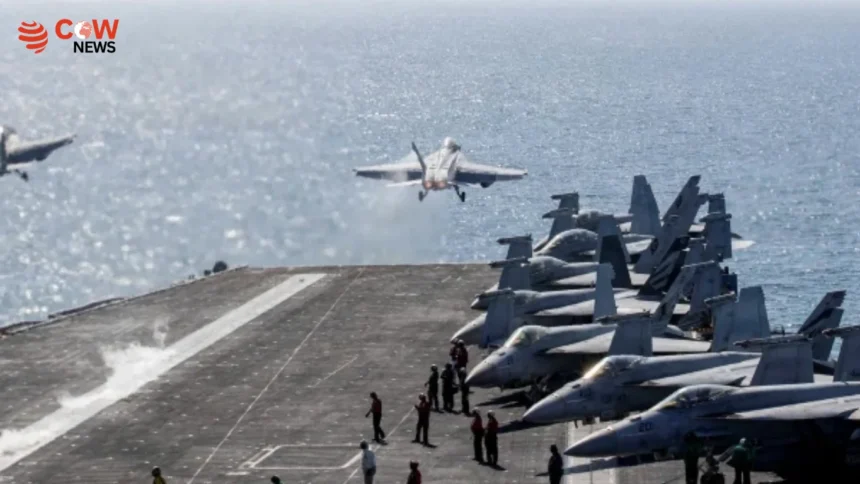
World ( The cow news digital ) The United States military has announced that it has completed a retaliatory operation against Iran following a reported incident involving an American attack helicopter near the Strait of Hormuz. The statement was issued by the US Central Command (CENTCOM), confirming that the operation has concluded.
According to CENTCOM, the action was carried out as a “defensive response” aimed at protecting US forces and safeguarding strategic interests in the region. The US military said that multiple Iranian military targets were struck during the operation, including air defense systems, ground control stations, and radar surveillance facilities located near the Strait of Hormuz.
The US Air Force and Navy reportedly participated in the coordinated strikes, using precision-guided munitions to target the identified sites. Officials described the mission as carefully executed and said that all planned objectives were successfully achieved.
The operation comes at a time of heightened tensions between Washington and Tehran, with both sides recently accusing each other of hostile actions targeting military installations in the region. The latest escalation has further intensified concerns over security in the Middle East, particularly around the Strait of Hormuz, a critical maritime route for global oil transportation.
US authorities did not provide specific details regarding potential casualties or the extent of material damage caused by the strikes. Similarly, Iranian officials have not issued an immediate formal response to the American announcement.
Military analysts note that the situation remains fluid and unpredictable, with the possibility of further escalation if diplomatic channels fail to de-escalate tensions. The Strait of Hormuz, through which a significant portion of the world’s oil supply passes, remains a focal point of strategic concern for global markets and regional stability.
Read more
- Trump Hopes Iran Talks Succeed, Warns Against Midnight Hammer
- China Urges Global Support for Sustainable Sudan Solution
International observers have warned that continued military activity in the area could have broader implications for energy prices and global economic stability. Calls for restraint and diplomatic engagement have increased from several international stakeholders amid fears of a wider regional conflict.
As of now, both sides continue to maintain heightened military readiness while the international community closely monitors developments in the region.