
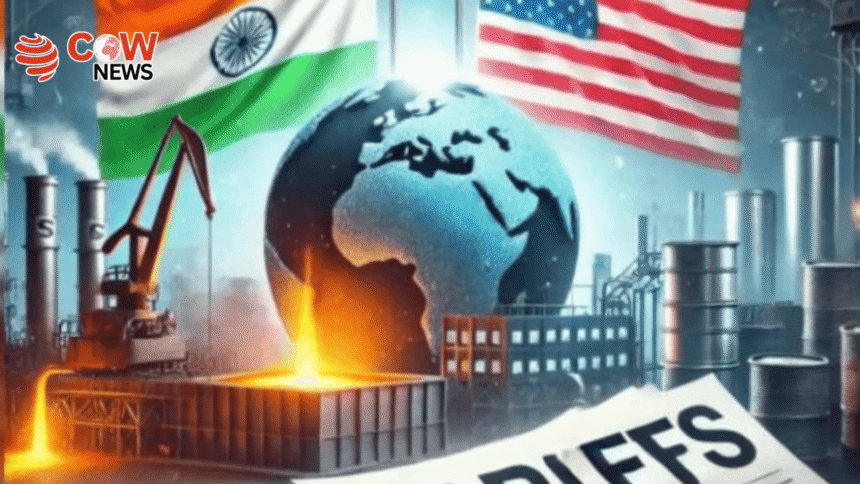
Washington (The COW News Digital )Despite spending millions of dollars on lobbying in the United States, India has faced significant diplomatic setbacks that money alone could not reverse. Following regional conflicts and notable losses in key engagements, New Delhi has increasingly relied on lobbying firms to repair its international image.
Read More:
Investigations by U.S.-based research group OpenSecrets and Indian publication The Indian Express have revealed India’s extensive lobbying efforts in the United States. According to OpenSecrets, India hired multiple lobbyists in 2025 to rebuild its tarnished diplomatic reputation.
The Indian government reportedly paid BGR Group $450,000 in an attempt to influence U.S. policymakers and restore its image abroad. The Indian Express corroborated these claims, detailing that India’s diplomatic efforts were closely linked to its perceived failures in regional operations.
The lobbying push, referred to as “Operation Sandur,” reportedly began after India suffered humiliating setbacks in military engagements. Under this operation, New Delhi sought to engage directly with the Trump administration and promoted a narrative intended to counteract international criticism.
In addition to BGR Group, India also hired SHW Lobbying Firm to facilitate high-level meetings with U.S. officials. The arrangement reportedly involved an annual fee of $1.8 million. Mercury Public Affairs, another U.S. lobbying firm, was contracted at $75,000 per quarter to further support India’s diplomatic outreach.
Experts say these efforts highlight India’s recognition of its diplomatic vulnerabilities and its reliance on professional lobbying networks to advance foreign policy objectives. However, analysts note that financial influence alone cannot fully offset the consequences of international setbacks or restore credibility on the global stage.
The revelations have sparked debate over the ethical and strategic implications of foreign lobbying, raising questions about the effectiveness of spending large sums to influence foreign policymakers. While lobbying can facilitate dialogue, critics argue it cannot compensate for substantive policy or operational failures.
India’s efforts in the U.S. underscore a broader trend in international diplomacy, where nations increasingly turn to lobbying firms to navigate complex geopolitical landscapes, especially after facing setbacks that weaken their negotiating positions.