

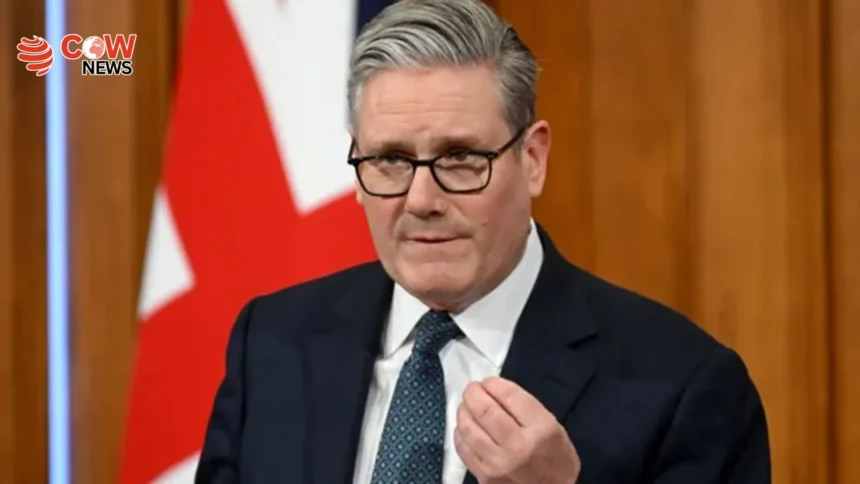
World ( The cow news digital ) London — British Prime Minister Keir Starmer has initiated urgent diplomatic efforts involving nearly 40 countries in an attempt to restore normal maritime traffic through the Strait of Hormuz amid escalating regional tensions and disruptions to global energy supply routes.
According to Arab media reports, the Strait of Hormuz remains a critical chokepoint for global energy trade, through which approximately 20 percent of the world’s oil and liquefied natural gas (LNG) passes under normal conditions. Recent developments in the region, including heightened military tensions and restricted navigation, have raised serious concerns in global markets.
Diplomatic sources indicate that the UK-led initiative aims to build a broad international coalition to ensure the reopening and security of the strategic waterway. The effort includes consultations with major energy-importing and exporting nations, as well as maritime security stakeholders, to prevent further escalation and stabilize global supply chains.
The crisis reportedly intensified following increased hostilities in the region, which have disrupted shipping routes and triggered volatility in international oil prices. Market analysts note that crude oil prices have surged significantly, crossing the $100 per barrel mark, reflecting a sharp increase of nearly 40 percent compared to pre-crisis levels.
The rising energy costs have already begun to impact several economies, with some Asian countries adopting emergency fuel conservation measures. In Malaysia, authorities have advised government employees to work from home as part of broader energy-saving strategies.
Meanwhile, shipping companies are reportedly rerouting vessels to avoid high-risk zones, leading to delays and increased transportation costs. Energy experts warn that prolonged instability in the Strait of Hormuz could have severe consequences for global inflation and supply chains.
READ MORE
- US Envoy Backs Israel’s Claim to Wider Middle East
- China Urges Global Support for Sustainable Sudan Solution
The UK government has not officially confirmed the full details of the coalition but has emphasized the importance of safeguarding international maritime routes and ensuring freedom of navigation under international law.
As diplomatic discussions continue, the effectiveness of the proposed 40-nation alliance remains uncertain. Analysts suggest that any resolution will require cooperation from regional powers as well as sustained international pressure to de-escalate tensions.
For now, global markets remain on edge, closely watching developments that could determine the future stability of one of the world’s most important energy corridors.