
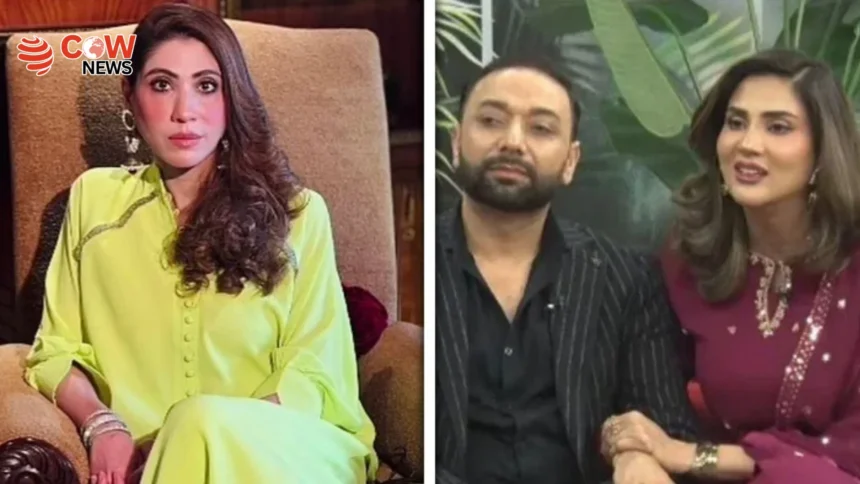
National ( The cow news digital ) Public debate has intensified on social media after a recent viral video of television host and actress Fiza Ali with her husband sparked controversy, drawing strong criticism from Punjab Women Protection Authority Chairperson Hina Pervaiz Butt.
The video, reportedly taken from a morning show appearance, circulated widely on various social media platforms, prompting mixed reactions from users. While some defended the on-screen moment as casual and harmless, others questioned the appropriateness of such content being broadcast on national television.
In a strongly worded post on social media platform X, Hina Pervaiz Butt expressed her disapproval, stating that television presenters should be mindful of their conduct on national screens. She criticized the viral clip and described it as inappropriate for public broadcast, urging media professionals to maintain decorum while appearing on television.
She further stated that national television channels carry a responsibility to uphold ethical standards, and any behavior perceived as inappropriate should be avoided. According to her remarks, such content does not align with the expectations of a general audience, especially when families and children are part of the viewership.
Hina Pervaiz Butt also called for regulatory attention, urging the Pakistan Electronic Media Regulatory Authority (PEMRA) to take notice of the matter. She emphasized that public figures and media hosts should set positive examples for younger audiences rather than engaging in behavior that could be considered controversial.
Her comments also highlighted broader concerns about the influence of television content on society, particularly on children and teenagers. She argued that media behavior plays a significant role in shaping social values and that responsible broadcasting is essential to maintain cultural and ethical standards.
read more
- Pakistan, Taliban, and Afghanistan: The Complex Triangle of Influence
- Imran Khan and the Politics of Idolization
Supporters of the criticism argue that television personalities should be held to higher standards due to their public influence, while others believe that the reaction is excessive and that the viral clip has been misinterpreted.
The incident has once again sparked a wider discussion on the boundaries of on-screen conduct, media freedom, and regulatory oversight in Pakistan’s entertainment industry.
Neither Fiza Ali nor the television channel involved has issued an official detailed response regarding the criticism so far.