
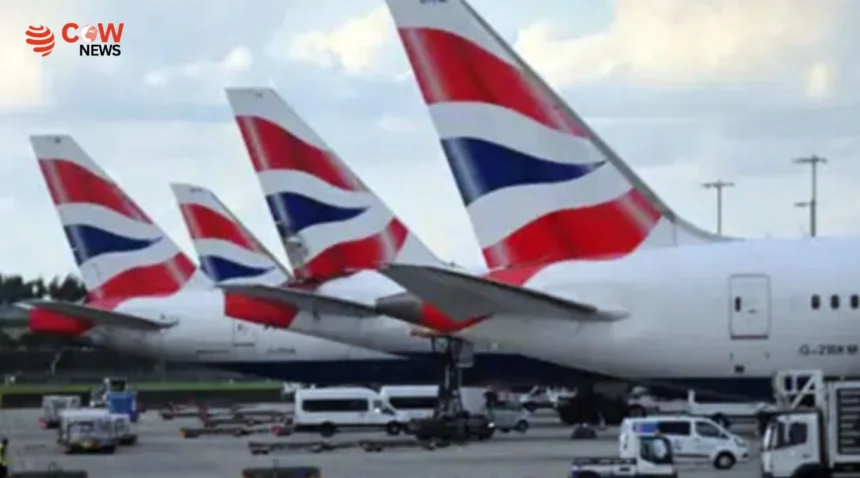
LONDON (The COW News Digital) Air travel across the United Kingdom was severely disrupted after a technical failure in the country’s air traffic control system caused widespread delays and the cancellation of more than 1,000 flights.
According to international media reports, thousands of passengers were left stranded for hours inside aircraft, on runways and in airport terminals as airlines and airports struggled to manage the disruption.
Flight-tracking website Flightradar24 reported that the technical problem affected air traffic operations across several parts of the country, creating significant disruption to scheduled arrivals and departures.
The UK’s National Air Traffic Services (NATS) said the problem occurred in its flight-processing system during the evening and was subsequently resolved. However, the impact continued even after the technical fault was fixed, with delays affecting operations at airports across the country.
NATS said airlines and airports were working to clear a substantial backlog of delayed flights and restore normal operations as quickly as possible.
The disruption affected at least 15 airports across the UK, according to reports, with major aviation hubs among those experiencing delays and operational difficulties.
London’s Heathrow, Stansted and London City airports were among the facilities affected. Manchester, Birmingham and Gatwick airports also reported disruption, while airports in Scotland experienced similar problems.
The technical failure created a knock-on effect throughout the aviation network, as aircraft and crews were forced to operate on revised schedules. Delays at one airport can quickly affect subsequent flights elsewhere, making it difficult for airlines to return to normal timetables immediately after a major systems problem.
Passengers were advised to check directly with their airlines for the latest information about individual flights, as schedules continued to change during the recovery process.
The incident has highlighted the importance of air traffic control systems in managing one of the world’s busiest aviation networks. Even a temporary failure in critical flight-processing infrastructure can have widespread consequences for passengers, airlines and airports.
Authorities and aviation operators are now focused on clearing the backlog and returning services to normal. Further updates are expected as airlines continue to reorganize schedules and accommodate passengers affected by cancellations and delays.
While the technical issue itself was reportedly resolved, the disruption caused by the failure is expected to take additional time to fully clear as airports work through the accumulated delays.