

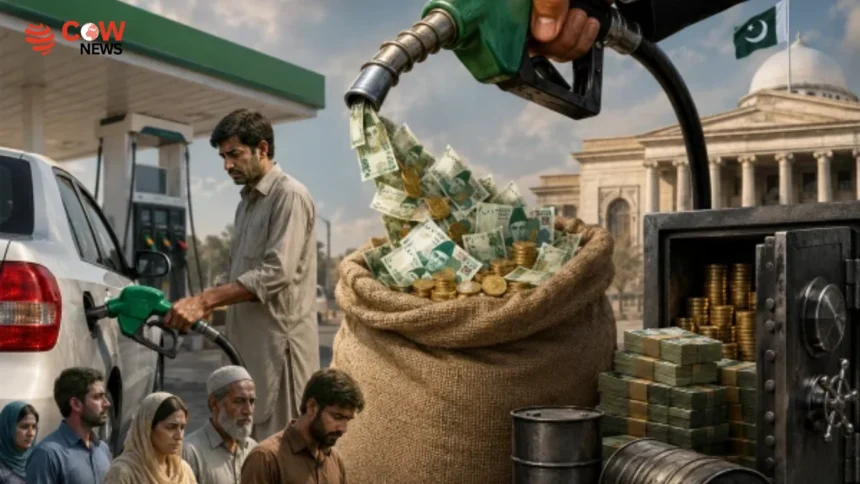
ISLAMABAD(The COW News Digital) The federal government has increased the petroleum levy on petrol, limiting the benefit of lower global oil prices for consumers despite a recent adjustment in domestic fuel prices.
Under the latest pricing revision, the government raised the petroleum levy on petrol by Rs6.22 per litre, bringing the total levy to Rs70.36 per litre. The move comes as international crude oil prices continue to ease, prompting expectations of greater relief for motorists.
While petrol consumers face a higher levy, the government reduced the petroleum levy on high-speed diesel (HSD) by Rs6.22 per litre, setting the revised rate at Rs70.82 per litre.
The government also left the petroleum levy on kerosene unchanged at Rs20.36 per litre. In addition, the carbon levy of Rs5 per litre on petroleum products remains in place without any changes.
The revised levy structure applies under the latest weekly review of petroleum pricing and reflects the government’s fiscal strategy while balancing revenue requirements and fuel price adjustments.
The decision has drawn attention as global oil prices have declined in recent weeks, leading many consumers to expect a more substantial reduction in domestic fuel prices. However, the increase in the petroleum levy on petrol has reduced the extent of relief available to motorists.
Petroleum levies are a significant source of government revenue and are not directly linked to fluctuations in international oil prices. As a result, authorities may adjust levy rates even when global crude prices move lower, depending on fiscal objectives and budgetary needs.
Read more
Energy analysts say domestic fuel prices are determined by several factors, including international oil prices, exchange rate movements, taxes, petroleum levies, freight costs, and dealer margins. Changes in any of these components can influence the final retail price paid by consumers.
The latest revision comes as households and businesses continue to monitor fuel costs due to their impact on transportation expenses, inflation, and the overall cost of living. Any future changes in petroleum prices are expected to depend on international market trends and the government’s taxation and revenue policies.