

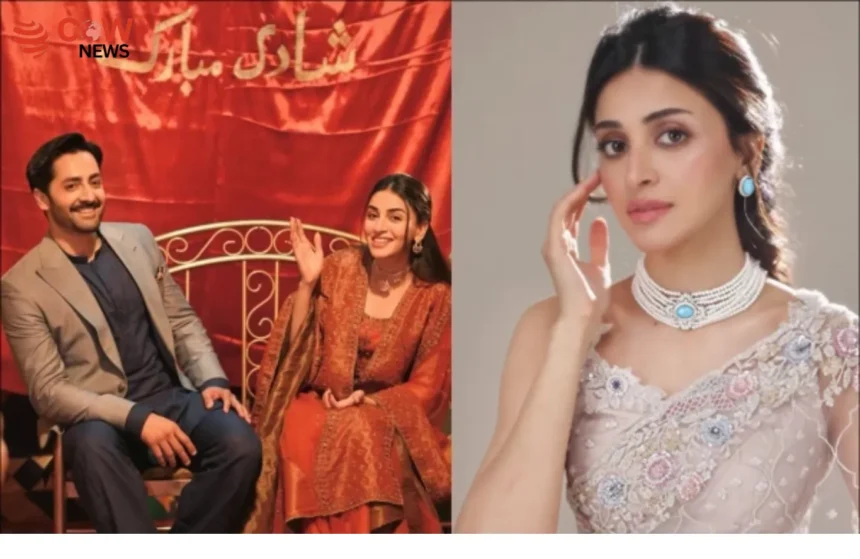
Karachi (The COW News Digital) Pakistani actress and model Anmol Baloch has raised concerns over the repeated portrayal of forced marriages in television dramas, questioning why storylines involving marriage without consent have become such a common feature of the country’s entertainment industry.
Speaking during an interview on Maliha Rehman’s show, the actress shared her views on a storytelling trend in which male protagonists are frequently shown marrying female characters against their wishes.
Baloch said she personally disagrees with this approach but acknowledged that forced marriage continues to appear in numerous Pakistani television serials.
The actress pointed out that many dramas revolve around situations in which a hero forcibly marries the heroine, sometimes placing both central characters in a relationship they never willingly chose.
According to her, such storylines have become a familiar formula for television writers, with marriage often used as a turning point to develop romantic relationships between the lead characters.
She suggested that one possible reason behind this trend could be restrictions or reluctance surrounding the portrayal of romantic relationships between unmarried couples on Pakistani television.
As a result, writers may use marriage as a convenient narrative device to establish a romantic connection between the main characters.
Baloch also highlighted another frequently repeated storyline in which a female character is about to marry someone else when the male protagonist suddenly arrives and marries her instead.
In these narratives, the female character is eventually shown accepting the situation and developing feelings for the man who initially married her without her consent.
The actress’s comments have drawn attention to a wider discussion about the themes and messages conveyed through popular television dramas.
Forced marriage, often presented as an element of romance or emotional conflict, has remained a recurring plot device in several Pakistani serials.
However, the repeated use of such storylines raises questions about how television represents relationships, personal choice and consent.
Television dramas play an influential role in shaping conversations about family relationships, marriage and social expectations. The way these subjects are presented can influence how audiences understand different social issues.
Baloch’s remarks highlight the difference between portraying a sensitive social issue as part of a dramatic storyline and presenting coercion as an acceptable foundation for a romantic relationship.
The actress, who has been associated with the entertainment industry for nearly a decade, has built a following through her television performances, fashion sense and selection of roles.
She has recently appeared in dramas including Iqtidar, Shiddat and Nashtar, continuing to attract attention from television audiences.
Her latest comments have once again brought the portrayal of marriage and romantic relationships in Pakistani dramas into the spotlight.
While forced marriage can be explored as a serious social issue in television storytelling, Baloch’s position makes clear that she does not personally support its repeated use as a romantic plot device.
Her observations have added to the ongoing conversation about whether Pakistani drama writers should move beyond familiar storytelling formulas and give greater attention to consent, individual choice and healthier portrayals of relationships.