

London (The COW News Digital) British property buyers are increasingly looking beyond traditional European holiday destinations as rising property prices, changing tax regulations and post-Brexit restrictions reshape the overseas holiday-home market.
For decades, Spain was the first choice for thousands of Britons seeking a second home abroad. Its Mediterranean climate, affordable coastal properties, established British communities and relatively easy travel connections made it one of the most attractive destinations for holiday-home ownership.
However, the situation is changing. More British buyers are now considering countries such as Turkey, Morocco, Portugal, Switzerland, Cyprus and Malta as alternatives to the Spanish property market.
The shift reflects a combination of financial considerations, lifestyle preferences, investment opportunities and changing residency requirements. While some buyers are looking for affordable properties where they can spend their holidays, others are interested in generating rental income or eventually relocating overseas.
Turkey and Morocco are attracting particular attention, while Portugal continues to appeal to British buyers because of its established international property market and comparatively accessible residency options.
Spain has traditionally dominated the overseas property market for British purchasers. Popular destinations such as Marbella, Alicante, Málaga, Costa Blanca and the Balearic Islands have attracted generations of holidaymakers who eventually decided to purchase their own properties.
However, owning a property in Spain has become more complicated for some British nationals following the UK’s departure from the European Union.
One of the biggest changes concerns residency arrangements. British citizens are now treated as non-EU nationals, meaning they must comply with immigration rules when planning extended stays in Spain.
Under the Schengen area’s 90-day rule, British visitors generally cannot remain in Spain and other participating countries for more than 90 days within any 180-day period without obtaining an appropriate visa or residence permission.
This has created difficulties for retirees and second-home owners who previously enjoyed spending several months at a time in their Spanish properties.
Taxation is another important consideration. Non-resident British property owners earning rental income in Spain face different tax arrangements from EU residents. The tax rate and deductions available depend on their circumstances and the applicable rules.
The cost of purchasing property has also increased in several popular Spanish coastal locations. Buyers who once expected to find affordable apartments near the beach are increasingly discovering that desirable properties come with substantial price tags.
According to figures cited in the original property-market report from Spain’s General Council of Notaries, Moroccan nationals purchased 4,960 properties in Spain during the six months to July 2026, overtaking British buyers, who purchased 4,541 properties over the same period.
The figures illustrate how international demand for Spanish property is changing.
In 2007, British buyers purchased approximately 17,000 Spanish properties in a single year, highlighting the scale of the market’s earlier popularity.
Although Spain remains an important destination for British investors, the combination of higher costs, taxation and residency restrictions is encouraging buyers to investigate other countries.
Turkey is emerging as one of the most interesting alternatives for British people interested in purchasing overseas holiday properties.
The country offers a combination of Mediterranean beaches, attractive coastal towns, relatively affordable living costs and a well-established tourism industry.
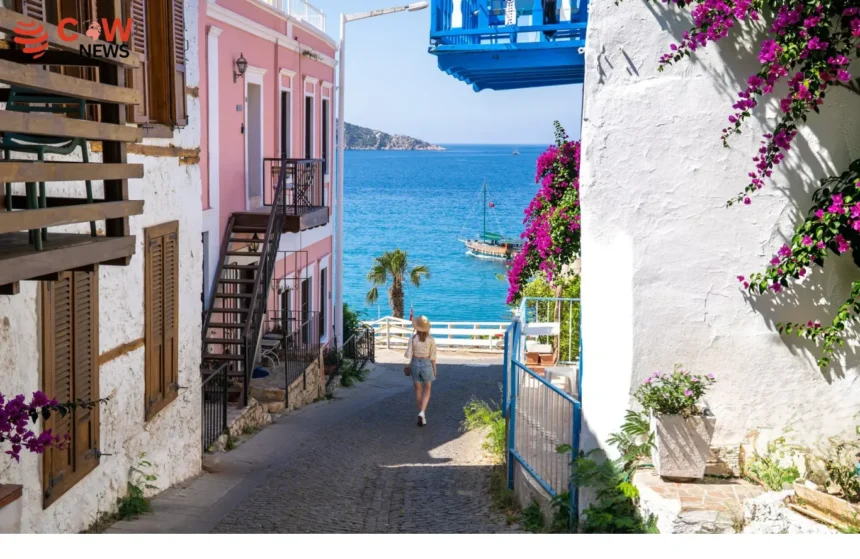
Popular locations include Antalya, Fethiye, Bodrum, Marmaris, Kas and Kalkan. These destinations offer different property options, ranging from modern apartments and gated residential developments to luxury villas overlooking the Mediterranean Sea.
Kalkan, in particular, has developed a reputation among international property buyers for its attractive coastline, traditional architecture, restaurants and luxury holiday accommodation.
British couple Sue and Sean Flynn are among the estimated 50,000 Britons who own property in Turkey.
The couple purchased a three-bedroom holiday villa overlooking the sea in Kalkan in 2014 for approximately £200,000.
They believe the property’s current value has increased to more than £400,000.
The villa also provides an opportunity to generate additional income through holiday rentals during the busy summer season.
The couple typically spend June, October and New Year’s Eve at their Turkish property, while renting it to holidaymakers during other periods.
For many overseas homeowners, this arrangement offers an opportunity to combine personal holidays with potential rental earnings.
Turkey’s lower day-to-day living costs compared with several Western European destinations are another attraction.

Food, local transport, restaurants and some household services can be relatively affordable, although costs vary depending on the location and lifestyle.
The country’s tourism infrastructure also makes it familiar to British holidaymakers, many of whom have visited Turkish coastal resorts before considering property ownership.
Despite its attractions, Turkey is not without financial risks.
Inflation remains a significant concern for property owners and investors. Even when property prices increase in Turkish lira, the actual value of those properties may not rise at the same rate when measured against international currencies.
The figures highlighted in the property-market report show that Turkish property prices increased by 22.3 per cent in the year to 2026, while consumer inflation reached 29.7 per cent.
This difference suggests that property prices experienced a decline in real terms during the period.
Foreign buyers should also consider currency fluctuations, taxation, maintenance costs and potential changes to property regulations.
Another important issue is understanding the legal process involved in purchasing real estate.
International buyers should obtain independent legal advice, verify property ownership, check title deeds and investigate whether there are outstanding debts or restrictions affecting the property.
Buying a property purely because it appears inexpensive can create serious financial problems if the building has structural defects or unclear ownership arrangements.
Nevertheless, Turkey continues to attract British buyers who want a Mediterranean lifestyle without paying the prices associated with some of Europe’s most expensive coastal destinations.
Portugal is another country benefiting from the changing preferences of British holiday-home buyers.
The Algarve, Lisbon, Porto and several smaller coastal communities continue to attract international purchasers.
For British nationals, Portugal offers familiar advantages, including relatively short travel connections to the UK, an established expatriate community, good tourism infrastructure and a wide range of properties.
The Algarve is particularly popular because of its beaches, golf courses, restaurants, pleasant climate and relaxed lifestyle.
One example is Belinda Lane, a retired music industry professional from Bedfordshire, who purchased an apartment in Alvor in 2018.
The property, which initially required substantial renovation, cost approximately £60,000.
Following improvements, its estimated value increased to around £285,000.
Alvor is a coastal village located close to Portimão and is known for its beaches, traditional streets, restaurants and attractive surroundings.
The area has become home to a mixture of British, Irish, Portuguese, Dutch and French residents, including people who own holiday apartments and others who live there permanently.
For Lane, the attraction is not simply the property itself but the lifestyle available in the Algarve.
She enjoys walking along the region’s sandstone cliffs, playing padel and spending time in the local community.
Portugal also offers a comparatively lower cost of living than several other Western European countries, although expenses depend heavily on the location and individual circumstances.
However, purchasing a property in Portugal does not mean that homeowners can ignore ongoing expenses.
Apartment owners may have to pay condominium charges covering the maintenance of communal facilities, swimming pools, gardens, lifts and shared buildings.
Unexpected repair bills can also become expensive.
Lane explained that her apartment complex charges approximately €112 per month in regular management fees, but owners have also faced additional payments for major building works.
Some of these requests have reportedly reached €3,500 and €5,500.
Older properties can present further challenges.
Dampness is a particular concern in buildings that remain unoccupied for extended periods. Properties without central heating or adequate ventilation may develop moisture problems, potentially resulting in expensive repairs.
British buyers considering a property in Portugal should therefore arrange a detailed building inspection before completing a purchase.
They should also calculate the costs of property management, insurance, maintenance, local taxes and periods when the property is not generating rental income.
Morocco is becoming another destination of interest for international property buyers, particularly those looking for traditional architecture, cultural experiences and a lifestyle that differs significantly from mainstream European holiday destinations.
Cities such as Marrakech, Fez, Casablanca, Rabat and Tangier offer a variety of property opportunities.
Some foreign purchasers are attracted by traditional courtyard houses, known as dars or riads, which can provide opportunities for private accommodation, boutique hospitality businesses and cultural tourism.
Unlike conventional beach destinations, Morocco’s appeal often centres on its history, architecture, food, traditional markets and local communities.
Fez is one of the country’s most historically significant cities. Its old medina contains narrow streets, traditional markets, historic buildings and centuries-old architecture.
Food author Tara Stevens, originally from Wales, purchased a 600-year-old traditional courtyard house in the Fez medina.
She paid approximately €27,000 for the property using money from an inheritance.
However, the purchase price represented only a small part of the overall investment.
After discovering significant structural problems, Stevens spent approximately €100,000 renovating the building.
The property had serious construction issues, including unstable walls, cracks extending towards the roof terrace and missing connections to electricity and the main drainage system.
Despite the challenges, the restored property has become both her second home and a business.
She operates a cookery school called Dar Namir, where local women are employed to help deliver traditional cooking experiences to visitors.
The property is estimated to be worth approximately €150,000 following the renovation work.
Stevens believes that Morocco is generally more attractive to buyers interested in lifestyle and cultural experiences than those seeking quick financial returns.
For her, living in Fez offers something that is difficult to replicate in conventional European holiday resorts.
The atmosphere of the old medina, traditional food markets, rooftop terraces and close relationships within the local community are among the main reasons she continues to spend part of the year there.
Although Morocco can offer relatively affordable property opportunities, foreign purchasers should understand the legal and administrative challenges before investing.
Traditional properties may require extensive renovation, particularly when they are located in historic districts.
Structural problems are not always immediately visible, and attractive plasterwork or decorative finishes can conceal serious defects.
Buyers should arrange independent structural inspections and obtain advice from qualified local professionals.
The legal process also requires attention.
Foreign purchasers should verify ownership documents, check the property’s legal status and understand the applicable registration and taxation requirements.
Agricultural land is subject to particular restrictions, and foreign buyers should not assume that every type of rural property is freely available for purchase.
Local legal assistance is particularly important when dealing with traditional properties in historic neighbourhoods.
Administrative procedures may also take longer than buyers expect, while property management can be more difficult in locations where professional management services are less developed.
Morocco can offer an attractive opportunity for people seeking a second home with cultural character, but it requires patience, local knowledge and a realistic renovation budget.
While Turkey, Morocco and Portugal are appealing to buyers seeking relatively affordable holiday homes, Switzerland and the European Alps continue to attract wealthier purchasers.
Traditional mountain chalets, ski apartments and luxury residences remain popular among people looking for year-round access to outdoor activities.
The appeal of Alpine properties has expanded beyond the traditional winter holiday season.
Climate change and changing travel preferences are encouraging more visitors to explore mountain destinations during the summer months.
Activities such as hiking, cycling, mountain climbing, skiing and nature tourism have helped several Alpine destinations develop stronger year-round tourism markets.
Switzerland is particularly attractive because of its infrastructure, natural scenery, international reputation and high-quality public services.
However, buying a holiday home in Switzerland can be significantly more complicated than purchasing property in some other countries.
Foreign ownership rules can restrict the purchase of residential property by non-residents, depending on nationality, residency status, property type and location.
Prices in desirable Alpine resorts can also be extremely high.
British buyers should therefore obtain specialist legal and financial advice before considering a Swiss chalet.
The French and Italian Alps also remain attractive alternatives, offering established ski resorts, mountain villages and opportunities for summer tourism.
According to international property specialists, some affluent British purchasers continue to favour these destinations because of their accessibility and established property markets.
Cyprus and Malta are also attracting attention from British nationals exploring alternatives to Spain.
Both countries have established international property markets, English-speaking communities and strong connections with British tourism.
Cyprus offers coastal properties, Mediterranean weather and a lifestyle that appeals to retirees, families and holidaymakers.
Popular locations include Paphos, Limassol, Larnaca and Ayia Napa.
The country offers a mixture of modern apartments, traditional houses, villas and properties in residential developments.
Malta, meanwhile, attracts buyers interested in historic towns, coastal communities and a compact island lifestyle.
Its English-speaking environment is another important advantage for British purchasers.
However, buyers should understand that Cyprus and Malta have different property regulations, residency arrangements and tax systems.
Neither country should automatically be considered a simple or inexpensive alternative to Spain.
Property prices in popular coastal areas can be substantial, while maintenance, insurance and management expenses should be included in any investment calculation.
Professional advice is essential before purchasing property or making decisions about long-term residency.
International property specialists believe that mainland Europe will remain important to British buyers despite the complications introduced by Brexit.
Jack Harris, a partner in the international property team at Knight Frank, has described demand across several established European destinations as mixed.
Certain locations in Spain, particularly the Balearic Islands and Marbella, continue to perform strongly.
However, competition from American buyers has increased in some areas following the introduction of additional direct flight routes.
France, Switzerland and Italy also remain popular among wealthier purchasers, particularly in Alpine destinations that attract visitors throughout the year.
Outside Europe, Morocco is attracting growing interest, while Barbados continues to maintain demand among British holiday-home purchasers.
For buyers with budgets below €1 million, Portugal, Turkey, Cyprus and Malta are among the destinations receiving attention.
The appeal of these markets varies considerably.
Some buyers prioritise affordability, while others are interested in residency options, rental opportunities, climate or the possibility of spending longer periods abroad.
There is no single destination that meets every buyer’s requirements.
Purchasing a second home overseas can be rewarding, but it is also a major financial commitment.
British buyers should consider several important issues before deciding where to invest.
A second home may be difficult to sell quickly, particularly in smaller markets or locations with limited international demand.
Buyers should consider the potential resale market before making a purchase.
The growing interest in Turkey, Morocco, Portugal, Switzerland and other destinations demonstrates that British buyers are becoming more flexible in their approach to overseas property ownership.
Spain remains an important market, but it no longer dominates every conversation about purchasing a second home abroad.
For some buyers, Turkey offers attractive coastal properties and relatively affordable everyday living.
Portugal provides an established European lifestyle with a strong international community.
Morocco appeals to people seeking traditional architecture, cultural experiences and a different pace of life.
Switzerland and the Alpine regions remain attractive to wealthy purchasers interested in mountain properties and year-round outdoor activities.
Cyprus and Malta provide additional options for buyers seeking Mediterranean surroundings and established international communities.
Ultimately, the best destination depends on the buyer’s financial position, lifestyle expectations, residency plans and willingness to manage an overseas property.
The experiences of British homeowners demonstrate that purchasing a holiday home abroad is not simply about finding the cheapest property or the sunniest beach.
It also involves understanding local regulations, maintaining buildings, managing expenses and adapting to a different way of life.
For some people, the investment may generate rental income and increase in value. For others, the greatest reward is having somewhere to escape the British winter and enjoy a different culture.
As traditional destinations become more expensive and regulations evolve, one thing is becoming increasingly clear: British holiday-home buyers are looking further afield, and the next generation of overseas property hotspots may look very different from those that dominated the market a decade ago.