

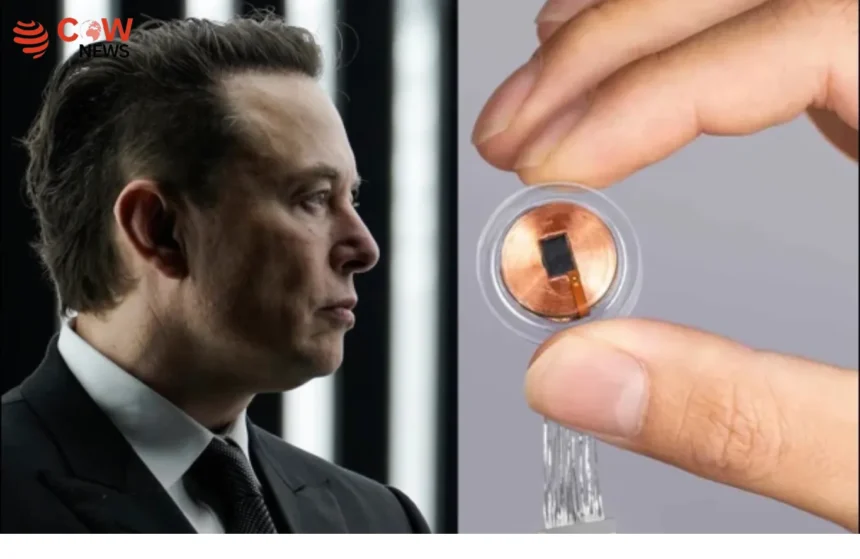
Washington (The COW News Digital) Elon Musk’s brain-computer technology company, Neuralink, has received approval from the US Food and Drug Administration (FDA) to launch a pivotal clinical trial of its brain implant in people living with amyotrophic lateral sclerosis (ALS), marking another step towards developing technology that could help people with severe paralysis regain greater independence.
The study, known as the LINK Pivotal Study, will assess the safety and effectiveness of Neuralink’s brain-computer interface (BCI) in individuals with significant physical disabilities caused by ALS, a progressive neurological disease that affects nerve cells responsible for controlling voluntary muscle movements.
The technology is designed to allow patients to operate computers and other digital devices using their thoughts, potentially offering new communication options for people who have lost much of their ability to move or speak.
Neuralink’s implant, known as the N1, is placed inside the skull, with extremely fine electrode threads extending into the brain. The device is positioned in the region responsible for planning movements and records neural signals associated with a person’s intention to move.
These signals are processed by the system and translated into digital commands, allowing users to control compatible devices without relying on physical movement.
According to the company, the latest clinical study will examine how effectively participants can use their thoughts to interact with computers and other digital equipment. Researchers will also evaluate the implant’s long-term safety, reliability and performance across multiple clinical centres.
Neuralink said more than 30 people had received its brain implants through earlier studies conducted in the United States, Canada and the United Kingdom. Participants have reportedly used the technology for activities such as communicating with family members, pursuing higher education and playing video games.
The company has opened enrolment for the pivotal study but has not disclosed the total number of participants, the expected duration or the names of all participating medical centres.
Importantly, FDA approval to conduct a clinical trial does not mean the device has received authorisation for commercial sale. The technology must undergo further evaluation before its wider medical use can be established.
The ALS trial is part of Neuralink’s broader research programme exploring potential applications of brain-computer interfaces.
The company’s PRIME study is examining the safety of the N1 implant and its R1 surgical robot, which is designed to place the electrode threads into the brain.
Another research programme, known as CONVOY, is investigating whether participants can use brain implants to control assistive devices, including robotic arms.
Neuralink is also developing communication technology through its VOICE study in collaboration with UT Southwestern Medical Center in Dallas, Texas. The research aims to explore whether people with severe speech impairments can communicate through text or computer-generated speech using brain signals.
In Canada, the CAN-PRIME study is being conducted at Toronto Western Hospital, while the United Kingdom has its own GB-PRIME research programme under University College London Hospitals.
The company is also exploring potential applications for people with visual impairments through its Blindsight device, which received the FDA’s Breakthrough Device Designation in September 2024.
Although significant scientific and regulatory challenges remain, the latest approval represents an important development in research into brain-computer interfaces and their potential role in improving the independence and communication abilities of people living with serious neurological conditions.