
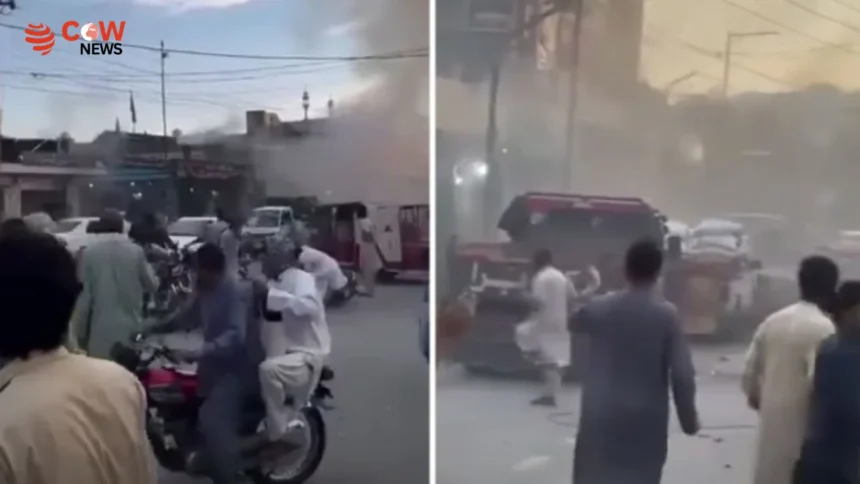
National (The cow news digital) SWAT: The death toll from a devastating suicide bomb attack, referred to as the Swat Kabal attack, near the Kabal Police Station in Swat has risen to 17, including seven police personnel and ten civilians, officials confirmed. This tragic incident has sent shockwaves through the local community. It has raised concerns about security in the region. The Swat Kabal attack highlights the ongoing challenges faced by law enforcement and emergency response teams in maintaining public safety in volatile areas.
At least 12 injured individuals, comprising eight police officers and four citizens, are currently undergoing treatment at the Saidu Sharif Teaching Hospital. The hospital staff are working tirelessly to provide the best possible care to the victims, many of whom are in critical condition.
Understanding the Impact of the Swat Kabal attack
The Ongoing Threat of the Swat Kabal attack
According to Bilal Ahmad Faizi, spokesperson for Rescue 1122 Khyber Pakhtunkhwa, emergency teams swiftly responded following the Swat Kabal attack blast. Under the direction of Director General Rescue 1122 Shah Fahd and District Emergency Officer Shoaib Mansoor, 13 ambulances and over 45 personnel participated in the rescue operation. Their immediate response was crucial in managing the aftermath of the explosion. They provided essential medical assistance and transported more than 15 injured victims to nearby facilities.
The coordination among various emergency services showcases the preparedness of local authorities in the face of such unexpected calamities. However, the situation remains dire with many families anxiously waiting for news of their loved ones.
District Police Officer (DPO) Swat Umar Gandapur and Deputy Inspector General (DIG) Malakand Syed Fida Hussain reported that the suicide bomber attempted to breach the main entrance of the Kabal Police Station during the Swat Kabal attack. Alert police officers intercepted the assailant at the gate, which likely prevented greater tragedy.
The attacker, facing immediate resistance, detonated his explosives, resulting in the regrettable loss of life and numerous injuries. This act of bravery from the police not only saved lives but also prevented the bomber from entering the building, which is situated near sensitive government installations and police lines.
The location’s significance underscores the need for heightened security measures in areas prone to militant activity. Such attacks like the Swat Kabal attack threaten not just individuals but the fabric of society itself.
A First Information Report (FIR) has been registered under terrorism charges at the Counter-Terrorism Department (CTD) police station on the complaint of the Kabal SHO following the Swat Kabal attack. The FIR details indicate that the explosion occurred at 6:04 PM near the station gate while a peaceful protest by a local organisation was concluding nearby.
This juxtaposition of a protest and a terrorist act raises questions about the motivations behind such violence and its implications on civil liberties in the region. Authorities suspect the involvement of local militant commanders associated with the Tehreek-e-Taliban Pakistan (TTP), a group increasingly active in the area. This has prompted calls for more robust counter-terrorism strategies to ensure community safety.
Inspector General of Police (IGP) Khyber Pakhtunkhwa Zulfiqar Hameed announced the formation of a Joint Investigation Team (JIT) to probe the Swat Kabal attack incident. This swift establishment of a dedicated task force reflects the authorities’ commitment to investigating the attack comprehensively and transparently.
Speaking to the media, he praised the fallen officers for their valor and announced a compensation package for the martyrs’ families, recognising the ultimate sacrifice made in the line of duty. He added that preliminary investigations have identified the suicide bomber, and security forces are actively pursuing the network behind the Swat Kabal attack.
Such measures are essential in restoring public confidence and ensuring that justice is served for those affected by this heinous act.
Federal Interior Minister Mohsin Naqvi, Governor Khyber Pakhtunkhwa Faisal Karim Kundi, and former Chief Minister Ali Amin Gandapur strongly condemned the Swat Kabal attack. In their statements, they expressed deep grief over the loss of lives and paid tribute to the martyred officers for their ultimate sacrifice in protecting the nation.
The Swat Kabal attack has not only affected the families of the deceased but has reverberated throughout the entire community, raising concerns about safety and security in public spaces. They directed authorities to provide the best possible medical care to the injured, highlighting the government’s responsibility towards its citizens during such crises.
Moreover, there is a growing demand for enhanced security measures in the region to prevent future incidents and to reassure the public that their safety is a priority.
In conclusion, the Swat Kabal attack has far-reaching implications for the community and the larger socio-political landscape in Pakistan. Efforts must be made not only to bring the perpetrators to justice but also to address the broader issues that contribute to such violence.
A concerted approach involving law enforcement, community leaders, and governmental support is necessary to create an environment where peace can flourish, and the threat of terrorism is diminished. The resilience of the people of Swat is commendable, and through unity and determination, they can rebuild and emerge stronger in the face of adversity.
The legacy of the Swat Kabal attack must be remembered to drive change.
Furthermore, the impact of the Swat Kabal attack extends beyond immediate casualties; it influences the psychological well-being of the community. Survivors, witnesses, and families of victims may experience long-term psychological effects that require support and intervention.
Mental health services must be made readily available to help individuals cope with trauma and loss. Community engagement activities, such as memorials for the victims of the Swat Kabal attack, can also play a vital role in fostering healing and solidarity among residents. The government and local organisations should work hand in hand to ensure that the emotional and psychological needs of those affected are addressed alongside physical needs.
The Swat Kabal attack serves as a grim reminder of the persistent threat posed by extremist groups in the region. It is crucial for local authorities and communities to engage in proactive measures aimed at countering radicalisation and fostering a culture of peace and tolerance.
Educational initiatives, community outreach programmes, and collaboration between law enforcement and local inhabitants are essential in building resilience against such violent extremism.
In the aftermath of the Swat Kabal attack, discussions around community safety and the need for comprehensive strategies to address the root causes of terrorism have become more pertinent than ever. The local government must prioritise investment in social programmes that aim to uplift communities economically and socially, thereby addressing the underlying issues that contribute to militancy.