
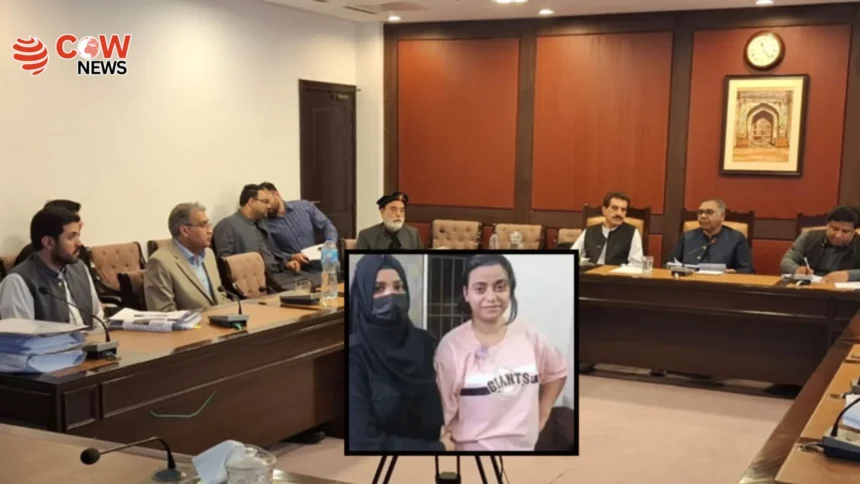
National ( The cow news digital ) The case involving accused drug trafficker Anmol, also known as “Pinky,” came under discussion during a meeting of the Senate Standing Committee on Interior, highlighting growing political attention on high-profile enforcement cases.
The committee session, chaired by Senator Saifullah Abro, reviewed a range of issues related to tax enforcement, customs practices, and misuse of seized assets. During the discussion, lawmakers raised concerns about the conduct of Federal Board of Revenue (FBR) officials and questioned their handling of confiscated property.
Senator Faisal Saleem Rehman criticized what he described as irregularities within enforcement agencies, alleging that officials sometimes misuse seized vehicles for personal use. He remarked that the situation was comparable to authorities consuming confiscated items instead of properly securing them.
Chairman Senator Saifullah Abro added a sarcastic remark during the meeting, suggesting that the FBR should deal with confiscated vehicles in the same manner as other illegal goods. He further referenced the recently highlighted case of Anmol alias Pinky, saying that such cases of seized “valuable” or controversial items had become part of parliamentary discussion.
The mention of the suspect drew attention within the committee as lawmakers continued broader discussions on enforcement inefficiencies and accountability within federal agencies. The debate also touched on how different institutions handle confiscated goods, particularly in narcotics and customs-related cases.
Separately, Senator Abid Sher Ali questioned the effectiveness of customs operations in different provinces, asking why enforcement appears more active in Punjab compared to Khyber Pakhtunkhwa and Balochistan. Minister of State for Interior Talal Chaudhry responded that customs authorities would be better positioned to explain operational differences, noting that the FBR is responsible for auctioning non-custom paid vehicles.
The discussion reflects ongoing parliamentary scrutiny of enforcement agencies, as lawmakers continue to raise concerns about transparency, regional disparities, and accountability in asset recovery and seizure procedures.
The inclusion of the Anmol alias Pinky case in a parliamentary setting underscores how individual criminal investigations can become part of broader debates on institutional performance and governance.