
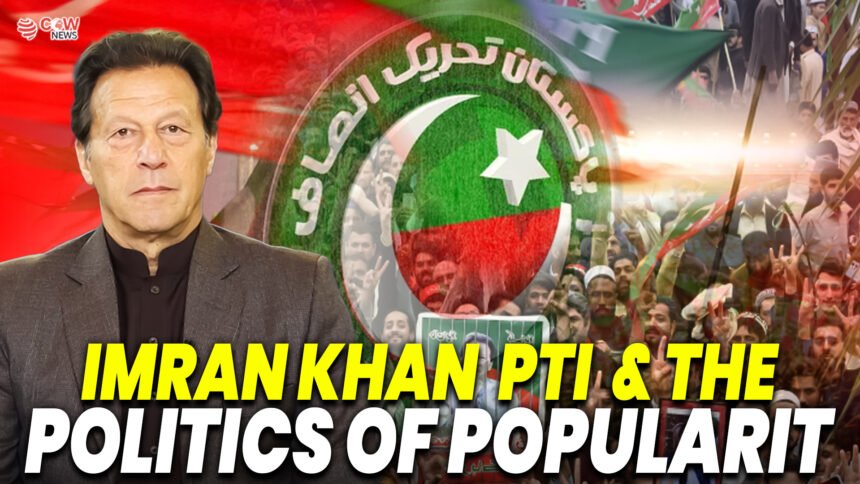
Since the constitutional dismissal of Imran Khan’s government, my position has consistently been that his resurgence in Pakistani politics has been largely shaped by both the strategies of certain elements within the establishment and by unnecessary, unwise actions taken against him. These actions, intended to weaken Khan, inadvertently rejuvenated the Pakistan Tehreek-e-Insaf (PTI), giving new life to a party that was otherwise politically struggling.
PTI’s claim of winning 180 National Assembly seats in the February 8, 2024 elections is yet another example of its traditional exaggeration and propaganda. In reality, while the party may have secured fewer seats than claimed, it still performed better than many other parties in certain areas. However, many of these wins were allegedly withheld from PTI due to manipulation by some establishment elements. Ironically, the very actions intended to suppress PTI’s influence contributed to the party’s renewed popularity.
Read More:
- US Slams Palestine Recognition as Empty Symbolism
- Taliban Extend Internet Curbs, Trade Faces Major Hit
- Late-Night Dinners Linked to Higher Blood Sugar Risk
The February 2024 elections were far from fully transparent or fair. However, if one argues that these elections were flawed and that the sitting government is therefore illegitimate, the same standard must apply to the 2018 elections, which also faced allegations of rigging. The government formed as a result of those controversial elections—Imran Khan’s first government—was likewise a product of contested processes. Accordingly, accountability should begin with those who brought Khan to power through questionable tactics and orchestrated strategies against Pakistan and its people since 2011.
A further question arises: if the military’s goal was to defeat PTI at all costs in February 2024 elections, why did PTI secure such a strong majority in Khyber Pakhtunkhwa? The answer lies in the timing and manner of political interventions. Had fresh, fair elections been held immediately within three months of Khan’s April 2022 constitutional removal, PTI likely would not have achieved significant victories. Instead, certain elements of the establishment used non-political, heavy-handed tactics against Khan, which paradoxically boosted his popularity and public sympathy.
It is important to note that this discussion is not about Imran Khan’s innocence. Khan is certainly accountable for overstepping legal boundaries, misusing authority, and making decisions that violated laws. However, the manner in which his legal cases were pursued, including unnecessary actions against PTI leaders and workers, provided ample opportunity for PTI’s propaganda to portray him as a victim of political persecution. This narrative significantly amplified his political image and support among the public.
The Political Legacy of Imran Khan
Before and during his tenure as Prime Minister, Khan engaged in several ethically and legally questionable activities. For instance, he allegedly accepted substantial sums, gifts, and favors from controversial figures such as Malik Riaz, granting him illegal advantages. Notably, funds recovered from the United Kingdom, totaling £19 million and initially transferred illegally abroad by Malik Riaz, were reportedly returned to him rather than benefiting the state or serving public accountability. Such actions directly contradicted Khan’s claims of honesty and integrity, undermining his public image as a leader of moral authority.
Additionally, Khan and his wife allegedly sold gifts received from foreign governments in inappropriate ways, further damaging Pakistan’s international reputation. Comparisons to previous leaders like Nawaz Sharif or Asif Ali Zardari are misleading. Unlike Khan, they did not claim moral superiority while engaging in minor corrupt practices. Khan’s public positioning as the foremost champion of honesty magnifies the impact of his ethical lapses.
On the international front, some narratives suggest that Zionist influence in the U.S. led to Khan being sidelined. In reality, strategic objectives in the region, particularly concerning Gaza and Iran, have influenced how global powers engage with Pakistan. While Pakistan supports peacekeeping, it refuses to participate in military action against Palestinians or Hamas. Any involvement of Pakistani forces in offensive operations would be unacceptable, though monitoring and protection roles could be considered strategically beneficial.
American pressure has also leveraged media channels, including pro-Israel journalists such as Jemima Khan, Sky News, and Piers Morgan, to influence political narratives within Pakistan, often targeting Khan to achieve international agendas. These campaigns reflect the complex intersection of domestic politics, media influence, and global strategic interests shaping Pakistan’s political landscape.
In conclusion, Imran Khan’s political trajectory illustrates a complex interplay of public support, legal controversies, establishment interventions, media campaigns, and international pressure. While Khan is not free from culpability, his resurgence and PTI’s continued popularity are shaped not merely by his actions but also by the unintended consequences of the strategies employed against him, and by global and domestic forces seeking to influence Pakistan’s politics. The narrative of victimhood, combined with media campaigns and selective legal actions, has transformed Khan into both a symbol of resistance and a controversial figure in Pakistan’s political arena.
By Shiraz Pracha