

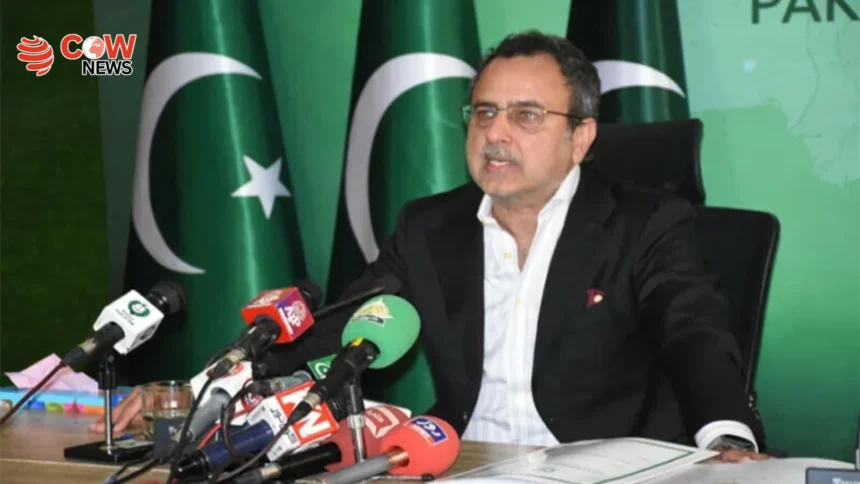
National ( The cow news digital ) Pakistan’s Federal Minister for Energy Awais Leghari announced on Friday that the country will begin reducing electricity load-shedding from tonight, assuring citizens that power supply conditions are expected to improve in the coming hours.
Addressing a press conference in Islamabad, the energy minister acknowledged the inconvenience faced by the public due to prolonged power outages and expressed regret over the situation. He stated that the government has consistently worked to pull the country out of power shortages and stabilize the electricity supply system.
Leghari said that electricity availability would improve starting tonight, with conditions gradually stabilizing after recent fluctuations in generation and fuel supply. He added that efforts are underway to balance demand and supply across both urban and rural areas.
He clarified that no load-shedding has been carried out specifically for Karachi Electric or Hyderabad, noting that K-Electric is currently receiving a record 2,100 megawatts from the national grid. Despite this, the country is facing an overall shortfall of around 4,000 megawatts.
According to the minister, the shortage has been caused by multiple factors, including disruptions in gas supply and a decline in hydropower generation. He explained that hydropower output has dropped by approximately 1,600 megawatts, while LNG supply constraints have led to an additional deficit of over 3,000 megawatts.
Leghari further stated that electricity demand in April has fluctuated between 9,000 and 20,000 megawatts, and when demand exceeds 16,500 megawatts, load-shedding becomes unavoidable. He added that approximately 1,400 megawatts of electricity is currently being generated through furnace oil to support the system.
He described the ongoing power shortage as temporary, emphasizing that the situation is expected to improve once gas supplies stabilize. The minister also mentioned that hydropower generation is expected to increase in the coming days, which would help reduce outages further.
Responding to legal concerns raised about “economic load-shedding,” Leghari said that such measures would eventually be regularized under the law. He also noted that fuel price adjustments could rise by up to Rs. 1.30 per unit due to increased reliance on furnace oil.
read more
n a separate television interview, he stated that once gas supplies resume from Qatar, particularly after stability in the Strait of Hormuz situation, LNG shipments are expected to reach Pakistan within five days, which would significantly reduce or eliminate load-shedding.
The minister expressed optimism that the power crisis is temporary and assured that the government is working toward long-term stability in the energy sector.