
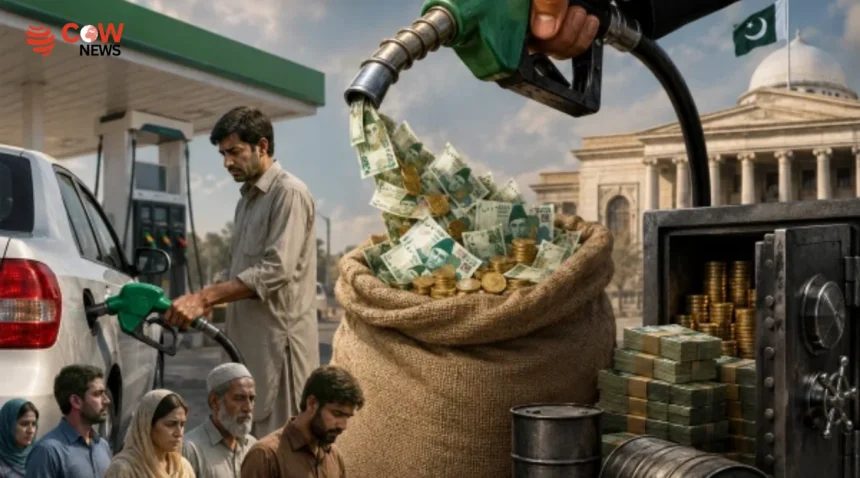
ISLAMABAD (The COW News Digital) Pakistan has assured the International Monetary Fund (IMF) that the impact of rising fuel prices will be passed on to consumers while structural reforms will continue despite the ongoing Gulf conflict.
According to a report by a private television channel, the IMF mission currently visiting Pakistan has called for sustained measures to ensure fiscal stability and reduce the growing circular debt in the energy sector.
The IMF delegation also stressed the need for effective and consistent steps to manage the country’s increasing debt burden. The discussions focused on maintaining financial discipline while addressing challenges facing the energy sector.
The mission emphasized the need to control circular debt in the energy sector, which remains a major financial challenge for Pakistan. It also discussed ways to generate alternative revenues to compensate for any fiscal gap that could emerge from a reduction in the petroleum levy.
Pakistani officials reportedly assured the IMF that structural reforms would continue despite the ongoing conflict in the Gulf region. The government also informed the Fund that higher fuel costs would be transferred to consumers rather than being absorbed entirely by the state.
The move could increase pressure on household budgets and transportation costs as fuel prices remain sensitive to developments in international energy markets. The government’s position reflects its efforts to maintain fiscal targets while managing the financial impact of higher fuel prices.
However, Pakistani authorities told the IMF that targeted subsidies had been introduced to protect vulnerable segments of society from the impact of rising fuel prices.
Under this approach, specific assistance would be provided to eligible and low-income groups to help reduce the financial pressure caused by higher energy and transportation costs.
The discussions with the IMF come as Pakistan continues efforts to meet its financial reform commitments while dealing with external economic pressures. Rising global fuel prices can affect the country’s import bill, inflation and government finances, making energy-sector reforms an important part of the broader economic program.
The IMF has continued to emphasize fiscal consolidation, revenue generation and reforms in the energy sector as part of efforts to strengthen Pakistan’s economic position.
The Pakistani government, meanwhile, has indicated that it intends to continue implementing structural reforms despite challenges arising from regional instability.
The issue of petroleum prices remains particularly significant because the government can use taxes and levies on fuel to generate revenue, but reducing such charges can create a gap in government finances.
Officials have therefore indicated that alternative revenue sources would need to be explored if petroleum-related revenues decline.
At the same time, targeted support for vulnerable groups is intended to provide relief to sections of the population most affected by higher fuel costs.
The discussions highlight the government’s effort to balance fiscal requirements with measures aimed at limiting the impact of rising energy prices on lower-income households.
Pakistan’s engagement with the IMF is taking place against the backdrop of continuing regional tensions and uncertainty in global energy markets. Authorities have maintained that economic reforms will continue while steps are taken to protect vulnerable sections of society from the effects of higher fuel prices.