
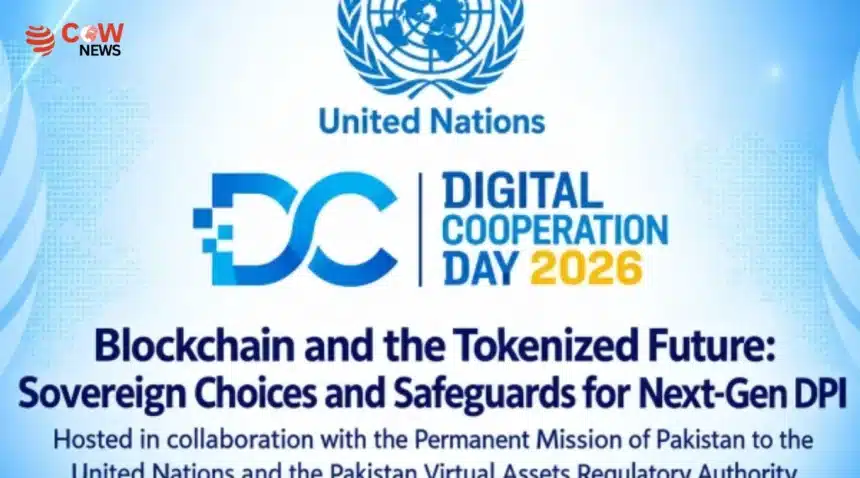
ISLAMABAD(The COW News Digital) Pakistan has co-hosted the United Nations’ first policy dialogue focused on tokenization, emerging technologies and the future of the global financial system, highlighting the growing role of digital finance and developing countries in shaping new financial frameworks.
The policy dialogue brought together discussions on the future of digital finance, technological innovation and the opportunities and challenges facing developing economies as financial systems increasingly move towards digital platforms.
Finance Minister Muhammad Aurangzeb said Pakistan is playing an important role in shaping the future of digital financial systems. He also highlighted the leadership of Bilal bin Saqib in the country’s virtual assets sector, describing it as significant for Pakistan’s emerging digital finance landscape.
Speaking at the event, Bilal bin Saqib, Chairman of the Pakistan Virtual Assets Regulatory Authority (PVARA), said the global financial system was undergoing a major transformation and argued that countries of the Global South should have a meaningful role in developing the rules governing the emerging system.
He said technological developments were advancing rapidly and governments needed to adapt their regulatory frameworks accordingly. According to Saqib, restrictions on emerging technologies do not necessarily stop technological progress but can instead leave governments outside the evolving digital economy.
Saqib also highlighted Pakistan’s transition from what he described as years of restrictions affecting the banking and virtual assets sectors towards the development of a regulatory framework for virtual assets. He said Pakistan had moved from an eight-year banking restriction to a virtual assets regulatory system within six months.
He stressed that governments needed to respond at the pace of technological development rather than relying solely on lengthy administrative processes. He also pointed to tokenization as a potential tool for making remittances faster and less expensive.
Tokenization generally involves representing real-world assets or financial instruments digitally through blockchain-based or other digital technologies. Supporters of the technology say it can potentially improve accessibility, transaction efficiency and transparency, although its wider adoption depends on regulatory, technological and security considerations.
According to the discussion, Pakistan is also considering the tokenization of debt instruments and sukuk as part of its broader exploration of digital finance. Such initiatives could potentially create new mechanisms for issuing, trading and managing financial assets in digital form.
Saqib noted that developing countries face significant economic and financial challenges but argued that large populations can also create substantial opportunities for digital finance. Greater digital participation could potentially expand access to financial services and create new avenues for investment and economic activity.
The UN policy dialogue comes as governments and financial institutions worldwide examine how emerging technologies could reshape traditional financial markets. Issues surrounding regulation, cross-border transactions, digital assets, financial inclusion and the role of developing economies are increasingly becoming part of international policy discussions.
Pakistan’s participation in the dialogue reflects its efforts to establish a regulatory framework for virtual assets while exploring emerging technologies such as tokenization. The discussions also provided an international platform for Pakistani officials and policymakers to present their views on the future of digital finance and the role of developing countries in shaping global financial rules.
The event marked a significant international discussion on how technological innovation could influence financial systems and how policymakers can balance innovation with effective regulation.