
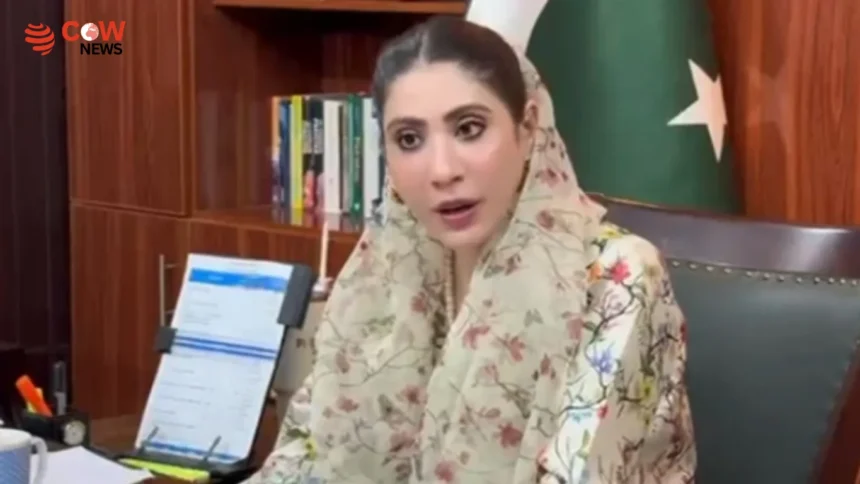
National ( The cow news digital ) Senior politician from the Pakistan Muslim League (N) and Member of the Provincial Assembly, Hina Parvez Butt, has raised concerns over the growing influence of social media content creators on young audiences, urging parents to closely monitor their children’s online activity.
In a recent post on the social media platform X, Hina Parvez Butt shared images of well-known YouTubers Rajab Butt, Ali Hyderabadi, and Sami Rasheed, and expressed concern over their influence on impressionable viewers. She stated that children who frequently follow such influencers may be negatively affected in terms of their moral and social upbringing.
According to her message, the increasing popularity of social media influencers and family vloggers has introduced new challenges for parents, particularly in terms of content consumption by minors. She emphasized that not all online content is suitable for younger audiences and warned that exposure to certain types of entertainment-driven material could impact children’s behavioral development.
Hina Parvez Butt urged parents to take a more active role in guiding their children’s digital habits. She suggested that families should remain aware of the platforms their children use and the type of personalities they follow online. Her remarks were framed as a call for greater parental responsibility in an era where digital media plays a central role in daily life.
The statement quickly gained traction on social media, sparking a broader debate among users. A section of commenters supported her viewpoint, agreeing that parents should exercise caution and ensure that children are not exposed to inappropriate or misleading content at a young age. These users argued that unchecked screen time and influencer culture can have long-term effects on children’s values and behavior.
Read more
- Trump Hopes Iran Talks Succeed, Warns Against Midnight Hammer
- Pakistan, Taliban, and Afghanistan: The Complex Triangle of Influence
However, others disagreed with her approach, suggesting that instead of criticizing specific influencers, the focus should be on improving digital literacy among parents and encouraging balanced content creation. Some users also argued that responsibility should not be placed solely on content creators, but shared between platforms, parents, and educators.
The discussion continues to evolve online, reflecting the growing tension between rapidly expanding digital entertainment culture and traditional expectations of child upbringing. As social media continues to shape public discourse, debates like these highlight the ongoing challenge of balancing freedom of expression with concerns about youth development and online safety.