
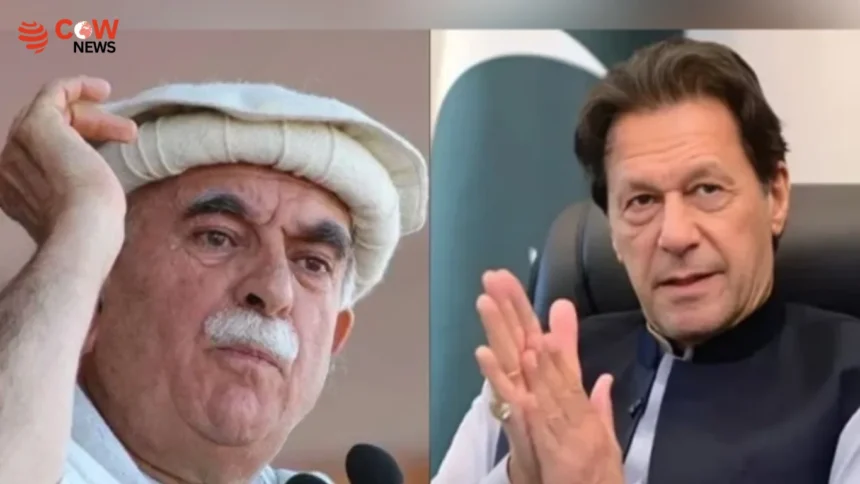
World ( The cow news digital ) Political tensions within Pakistan’s opposition camp appear to be intensifying as pressure mounts on Opposition Leader Mahmood Khan Achakzai to deliver tangible results through dialogue with the government.
When Achakzai was appointed opposition leader five months ago with the support of Pakistan Tehreek-e-Insaf (PTI) and allied parties, many observers believed his reputation as a seasoned politician and his longstanding ties with the ruling political leadership could help reduce political polarization and open channels for negotiations.
However, recent developments in parliament suggest that hopes for meaningful dialogue have yet to materialize. Instead, exchanges between the government and opposition have become increasingly confrontational, reflecting the deep political divide that continues to dominate the national landscape.
During a recent National Assembly session, Achakzai criticized the government, questioning its democratic credentials and accusing it of restricting the opposition’s constitutional right to hold protests and public gatherings. Prime Minister Shehbaz Sharif rejected the allegations and defended the government’s legitimacy, leading to a heated exchange between both sides.
The situation became more tense when the Speaker intervened and cautioned Achakzai against criticizing state institutions on the assembly floor. Opposition lawmakers condemned the remarks, arguing that they undermined freedom of expression within parliament.
A key expectation surrounding Achakzai’s appointment was his ability to facilitate negotiations on issues important to PTI, particularly matters relating to the welfare and medical treatment of the party’s founding leader. Despite repeated calls for engagement, opposition supporters believe little progress has been achieved, contributing to growing frustration within PTI ranks.
Senior PTI leader Ali Muhammad Khan recently stated that the prime minister had extended invitations for talks to Achakzai on multiple occasions and urged the opposition leader to take decisive steps toward achieving the objectives for which he was entrusted with the role.
Some party figures have gone further, suggesting that if meaningful outcomes are not achieved, PTI may reconsider the authority and responsibilities granted to key opposition representatives, including Achakzai and allied parliamentary leaders.
Read more
- Pakistan, Taliban, and Afghanistan: The Complex Triangle of Influence
- Imran Khan and the Politics of Idolization
Meanwhile, government figures continue to express confidence in Achakzai’s political judgment. Senator Pervaiz Rashid described him as a democratic and experienced politician capable of navigating complex political challenges through dialogue and consensus.
Analysts note that the broader challenge may not lie with Achakzai himself but with the limited political space available for compromise amid heightened tensions. As political divisions persist, expectations for negotiations remain high, while pressure continues to grow on opposition leadership to produce results through constitutional and democratic means.