
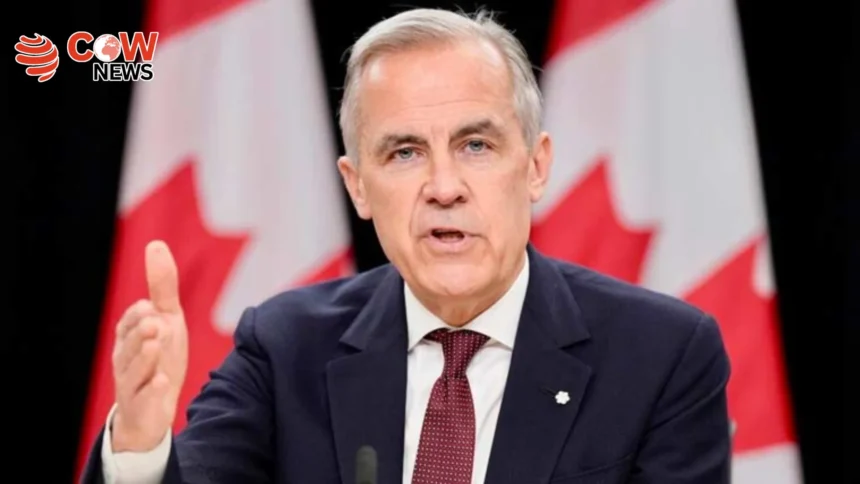
Canadian Prime Minister Mark Carney has called on the United States administration to respect Canada’s sovereignty, responding to reports that have raised concerns in Ottawa about alleged contacts between US officials and separatist elements within Canada. The remarks underline growing sensitivities in bilateral relations as both countries navigate complex political and economic ties.
Speaking to the media in Ottawa, Prime Minister Carney rejected claims suggesting that the issue of Alberta’s separation from Canada had ever been discussed with US President Donald Trump. He described such reports as misleading and emphasized that Canada’s internal affairs are not open to external influence or interference.
“The sovereignty of Canada is not negotiable,” Carney said, adding that any suggestion of foreign involvement in domestic political matters is unacceptable. His comments came after media reports alleged that Alberta-based separatist figures had engaged in discussions with members of the Trump administration regarding the province’s potential independence.
Read More:
- Curfew Imposed in Nepal After Mosque Attack Sparks Unrest
- UK and France Agree on Troop Deployment for Ukraine
- Trump Warns Iran, Says Response Does Not Mean Troop Deployment
The Canadian prime minister stressed that Alberta remains a vital and integral part of the country. He highlighted the province’s central role in Canada’s economy, noting that Alberta is one of the nation’s most important energy-producing regions and a key contributor to national growth and stability.
Carney’s statement aimed to reassure Canadians amid rising speculation and political debate triggered by the reports. He underlined that the federal government is committed to national unity and to addressing regional concerns through constitutional and democratic processes, rather than external engagement.
Relations between Canada and the United States have historically been close, marked by deep economic integration, shared security interests and longstanding diplomatic cooperation. However, analysts note that issues involving sovereignty and territorial integrity are particularly sensitive and can quickly strain even strong alliances if not handled carefully.
The reports that prompted Carney’s response suggested that some separatist voices in Alberta were exploring international support for their cause. While the US administration has not officially commented on the allegations, Canadian officials have made it clear that any such interactions would be viewed as inappropriate.
Political observers say the prime minister’s firm stance is intended both to send a clear message to Washington and to reinforce confidence at home. By publicly rejecting the notion of discussions about Alberta’s separation, Carney sought to close the door on speculation and reaffirm federal authority.
As the situation develops, attention will remain focused on how both governments manage the issue diplomatically. Canadian officials have reiterated their expectation that allies respect Canada’s constitutional framework and democratic institutions.
For now, Ottawa appears determined to contain the issue and prevent it from escalating into a broader diplomatic dispute, while emphasizing that Canada’s unity and sovereignty remain non-negotiable principles.