
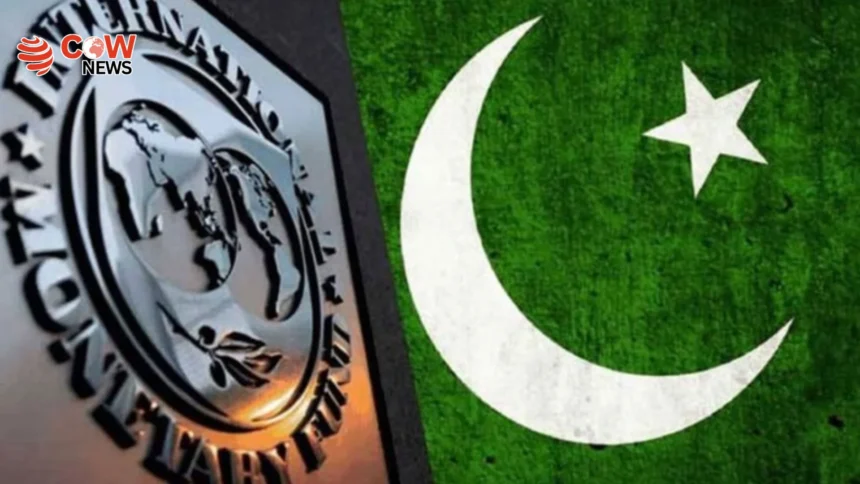
Islamabad(The COW News Digital)Pakistan has reportedly assured the International Monetary Fund (IMF) that electricity tariffs will be increased as part of ongoing economic reforms, while also committing to limit budgetary power subsidies to 830 billion rupees in the upcoming fiscal framework.
According to official sources, the government has agreed to keep electricity subsidies within the capped amount of Rs 830 billion in the next budget as part of broader fiscal consolidation measures under the IMF-supported programme. The commitment is aimed at reducing financial pressure on the national exchequer while improving cost recovery in the energy sector.
The agreement comes under the Extended Fund Facility (EFF), where Pakistan has pledged to implement key structural benchmarks to stabilize the economy. Among these measures is the introduction of a revised base electricity tariff, which is scheduled to take effect from January 15, 2027, in line with program requirements.
Officials familiar with the matter stated that the tariff adjustment is intended to offset external shocks, including volatility in global energy markets following recent geopolitical tensions in the Gulf region. The government believes that timely revisions in electricity prices are necessary to maintain the financial sustainability of the power sector.
In addition to tariff reforms, the privatization of several power distribution companies, including IESCO, GEPCO, and FESCO, has faced further delays. Authorities now expect the process to be completed in early 2027, reflecting ongoing challenges in restructuring the energy sector.
Economic experts suggest that while these reforms may improve fiscal discipline in the long term, they could also place additional pressure on household budgets in the short term, particularly amid already high inflation levels.
The IMF has consistently emphasized the need for Pakistan to reduce circular debt, improve energy efficiency, and eliminate untargeted subsidies. The latest commitments are seen as part of continued negotiations aimed at ensuring macroeconomic stability and securing future financial disbursements.
The government, on its part, maintains that the reforms are necessary to create a more sustainable energy pricing mechanism and to reduce dependence on borrowed funds for subsidizing electricity consumption.
As discussions continue, policymakers face the challenge of balancing economic reforms with public affordability concerns, especially in the power sector, which remains one of the most sensitive areas of Pakistan’s economy.