

Delhi( The COW News Digital)Tensions between India and Pakistan resurfaced this week after top Indian military officials once again issued provocative statements directed at Islamabad. The rhetoric has been described by observers as “hollow threats” from a leadership grappling with past setbacks against Pakistan’s defense forces.
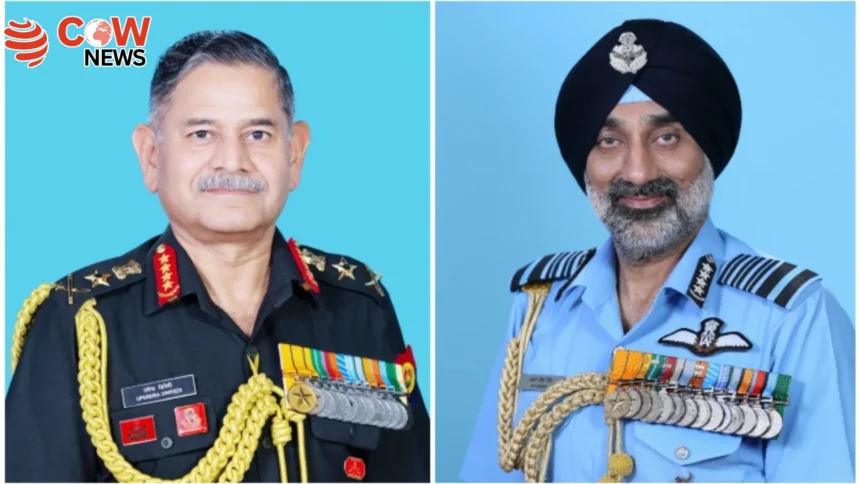
According to Indian media, Army Chief General Upendra Dwivedi, while addressing troops in Rajasthan, warned Pakistan to stop “supporting terrorism” if it wished to remain on the world map. He further asserted that the restraint shown by Indian forces during “Operation Sandur” would not be repeated in the future. Dwivedi also instructed Indian soldiers to remain ready for any potential action, signaling heightened war-like rhetoric.
In parallel, Indian Air Force Chief Air Chief Marshal Amar Preet Singh claimed during a press conference that India had destroyed five Pakistani fighter jets during the May clashes. He alleged that both F-16s and JF-17 Thunder jets were among those downed. However, Singh offered no evidence to support his claim. When questioned by journalists about India’s own aircraft losses to Pakistani air defenses, the Air Chief chose not to respond.
Pakistan’s Defense Minister Khawaja Asif, in response, reiterated his earlier challenge for both nations to conduct an independent verification of their current aircraft inventories. This, he argued, would expose the falsity of India’s assertions and provide transparency regarding actual losses.
The May conflict was among the most intense escalations in recent years. On the night of May 6–7, Indian fighter jets carried out strikes on multiple locations within Pakistan, causing civilian casualties. In a swift counterattack, the Pakistan Air Force destroyed seven Indian aircraft, including modern Rafale jets. Subsequently, India shifted tactics by launching drone and missile attacks on urban centers, which Pakistan countered with “Operation Banyan Marsous,” targeting Indian air bases and military installations.
Analysts suggest that India’s renewed aggressive language reflects both domestic political pressures and a need to project strength despite recent battlefield embarrassments. On the other hand, Pakistan’s leadership has stressed the importance of deterrence and vigilance while highlighting its capacity to defend national sovereignty.
While diplomatic channels remain quiet, the latest outbursts from Indian commanders highlight the persistent fragility of peace in South Asia. Experts warn that unless both countries prioritize dialogue over confrontation, such rhetoric risks reigniting dangerous escalations between two nuclear-armed neighbors.