
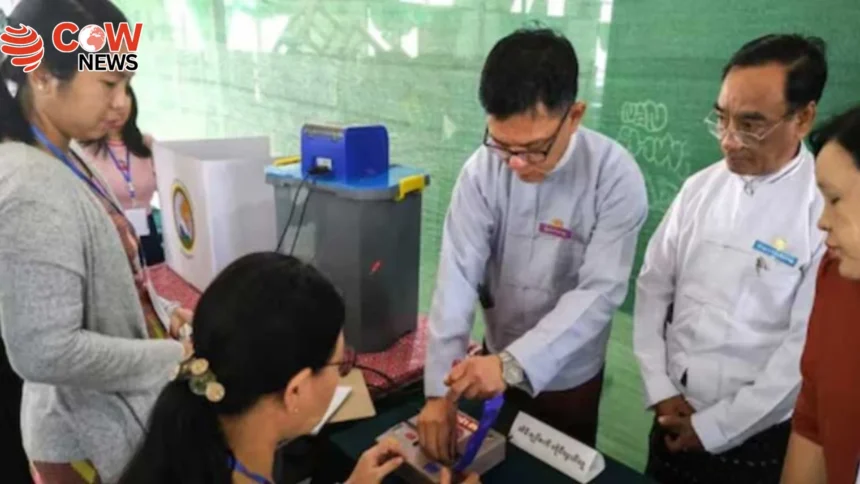
Myanmar (The COW News Digital)Myanmar has completed the first phase of its general elections under the shadow of military rule and ongoing civil conflict, amid widespread criticism from the international community. The voting took place in limited areas under military control, with turnout reported to be extremely low, according to local media and observers.
The election process is being conducted in three phases. The second phase is scheduled for January 11, while the third and final phase will take place on January 25, 2026. Official results are expected to be announced after February 2026. Analysts warn that political tensions and internal conflict could intensify following the elections.
Read More:
- Taliban Extend Internet Curbs, Trade Faces Major Hit
- US Slams Palestine Recognition as Empty Symbolism
- Late-Night Dinners Linked to Higher Blood Sugar Risk
The polls are being held nearly five years after the military seized power in a coup, overthrowing the elected civilian government. Since then, Myanmar has been gripped by widespread unrest, armed resistance, and a deepening humanitarian crisis. Large parts of the country remain outside the control of the military government, making nationwide voting impossible.
The United Nations, Western governments, and international human rights organizations have strongly criticized the elections, calling them neither free nor fair. Rights groups argue that the military-backed process lacks transparency and is designed to legitimize continued military rule rather than reflect the will of the people.
Opposition groups and human rights organizations say real power will remain firmly in the hands of military chief Min Aung Hlaing, regardless of the election outcome. They also claim that parties aligned with the military are likely to dominate the results due to restrictions on opposition forces and the exclusion of key political actors.
Security concerns and ongoing fighting between the military and ethnic armed groups have prevented voting in many regions. Estimates suggest that nearly one-third of Myanmar’s territory is currently controlled by resistance or rebel groups, with elections taking place only in areas firmly under military authority.
Political analysts warn that instead of easing tensions, the elections could further inflame divisions within the country. Many fear that the lack of inclusivity and legitimacy may lead to increased resistance and prolonged instability.
As Myanmar moves toward the next phases of the electoral process, the international community continues to call for an inclusive political dialogue, an end to violence, and the restoration of genuine democratic governance. However, prospects for stability remain uncertain amid deep political polarization and ongoing conflict.