
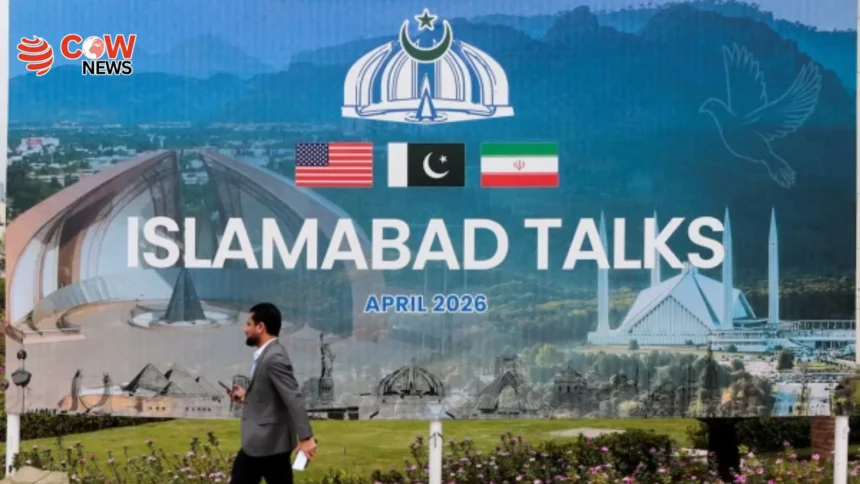
Islamabad ( The cow news digital ) Pakistan has once again drawn international attention for its diplomatic engagement after successfully facilitating dialogue between Iran and the United States, bringing the two long-time rivals to the negotiating table for direct talks after decades of strained relations.
According to official sources, the breakthrough was achieved through sustained diplomatic efforts led by Pakistan’s leadership, particularly the Deputy Prime Minister and Foreign Minister, who played a central role in coordinating and hosting the high-level discussions in Islamabad.
The negotiations reportedly continued for more than 31 hours across multiple sessions, involving complex and sensitive issues related to regional security, nuclear concerns, and long-standing geopolitical tensions. Officials described the process as highly delicate, requiring continuous engagement and behind-the-scenes coordination.
Pakistani authorities emphasized that the diplomatic process remained confidential due to its sensitive nature. They stated that detailed discussions could not be disclosed publicly, as the matter involved classified diplomatic exchanges between the participating parties.
Despite the secrecy surrounding the content of the talks, sources confirmed that both Iran and the United States agreed to engage in structured dialogue and expressed willingness to continue negotiations aimed at reducing tensions and preventing further escalation.
Officials noted that Pakistan’s role was strictly facilitative, focused on creating a neutral platform for dialogue and ensuring that communication channels remained open between the two sides.
Diplomatic observers have described the development as a significant milestone in regional diplomacy, highlighting Pakistan’s ability to act as a bridge between major global powers at a time of heightened international uncertainty.
read more
- China Urges Global Support for Sustainable Sudan Solution
- Pakistan, Taliban, and Afghanistan: The Complex Triangle of Influence
The facilitation effort is being viewed in diplomatic circles as a notable achievement for Islamabad’s foreign policy establishment, reflecting its growing role in conflict mediation and regional stability initiatives.
While no detailed agreements have been publicly announced, officials indicated that the process marks an important step toward sustained engagement and potential future breakthroughs.
Further updates are expected as diplomatic channels continue to remain active between the concerned parties.