World ( The cow news digital ) Scientists have identified a rare and previously unknown crystal formed in the aftermath of the world’s first nuclear explosion, known as the Trinity Test, conducted in 1945 in New Mexico, USA. Researchers say the material could not have formed under any natural conditions on Earth.
The discovery sheds new light on the extreme physical and chemical processes triggered by nuclear detonations. According to experts, the crystal was created under extraordinary conditions of heat, pressure, and energy release that exist only for a fraction of a second during such explosions.
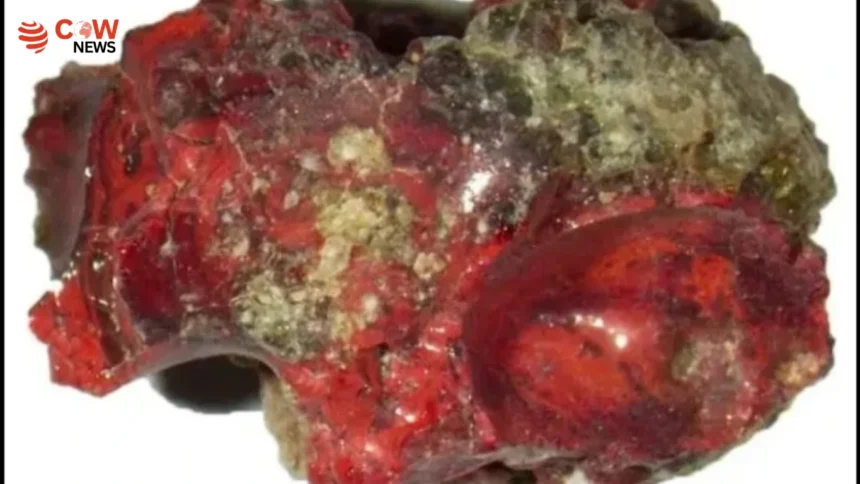
A research team led by Luca Bindi from the University of Florence analyzed materials collected from the Trinity Test site and confirmed the existence of a previously unidentified calcium-copper-silicate type-1 clathrate. Scientists emphasized that this is the first confirmed crystalline structure of its kind associated with nuclear explosions.
The Trinity Test, carried out as part of the United States’ Manhattan Project, marked the beginning of the nuclear age. The device, nicknamed “Gadget,” used a plutonium implosion mechanism and produced an explosive yield equivalent to approximately 21 kilotons of TNT. The blast not only changed the course of global history but also created unique physical conditions that scientists are still studying today.
Researchers explained that such materials form when matter is exposed to extreme and rapidly changing environments, which cannot be replicated using conventional laboratory methods. As a result, these crystals are considered “impossible minerals” because they defy normal geological formation processes.
The team noted that the discovery helps expand scientific understanding of how matter behaves under extreme energy conditions. It may also provide insights into high-energy physics, materials science, and the long-term environmental effects of nuclear detonations.
Read more
- China Urges Global Support for Sustainable Sudan Solution
- Pakistan, Taliban, and Afghanistan: The Complex Triangle of Influence
Experts believe that further analysis of similar materials could reveal more unknown compounds formed during nuclear tests conducted during the mid-20th century. These findings continue to highlight the lasting scientific and environmental legacy of the early nuclear era.
The study has been described as a significant contribution to both mineralogy and nuclear physics, offering a rare glimpse into the materials created during one of the most powerful human-made explosions in history.