

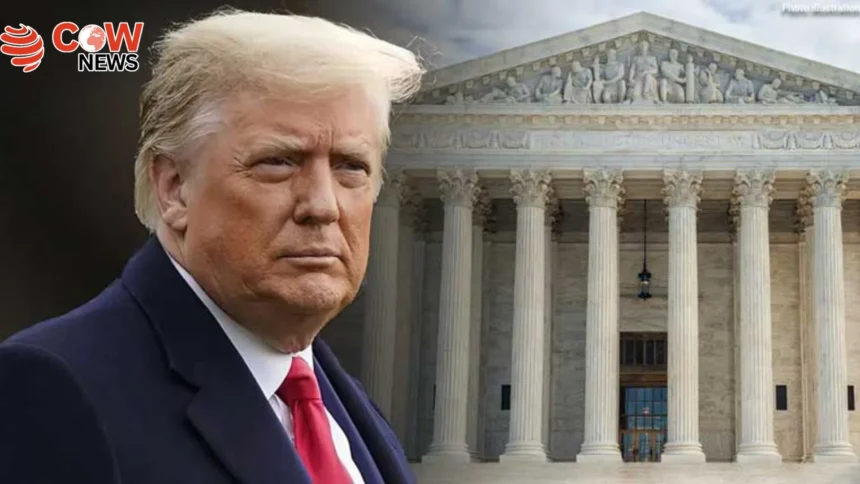
Washington(The COW News Digital)The United States Supreme Court has rejected former President Donald Trump’s request to deploy the National Guard in Chicago, delivering a significant legal setback to his efforts to expand federal authority over state-controlled forces.
According to news agencies, the top court upheld earlier rulings that blocked the deployment, making it clear that a US president cannot federalize the National Guard without fulfilling specific legal conditions. The decision reinforces constitutional limits on executive power and affirms the authority of states over their National Guard units unless extraordinary circumstances apply.
Read More:
- US Slams Palestine Recognition as Empty Symbolism
- Trump Threatens Kabul Over Bagram Airbase Control
- Taliban Extend Internet Curbs, Trade Faces Major Hit
The case originated in October, when a federal district judge in Chicago issued a temporary injunction preventing the deployment. District Judge April Perry ruled that the Trump administration had failed to meet the legal threshold required to place the National Guard under federal control. Following that decision, the Department of Justice filed an appeal, ultimately taking the case to the Supreme Court.
In its ruling, the Supreme Court declined to overturn the lower court’s order, effectively ending the administration’s legal challenge. The court emphasized that federal law requires clear and specific conditions—such as rebellion or the inability of state authorities to enforce the law—before the National Guard can be deployed without a governor’s consent.
Trump had ordered the deployment of National Guard and federal forces to cities including Chicago and Portland, arguing that Democratic-led cities were facing widespread unrest, rising crime, and violent protests. He and his allies maintained that federal intervention was necessary to restore law and order.
However, Democratic mayors, governors, and civil rights groups strongly opposed the move, accusing Trump of abusing presidential powers for political purposes. Critics argued that local and state authorities were capable of managing public safety and that the proposed deployment risked escalating tensions rather than calming them.
Legal experts say the Supreme Court’s decision sends a clear message about the balance of power between the federal government and the states. “This ruling underscores that the National Guard is primarily a state force and cannot be used at the president’s discretion,” said one constitutional law analyst.
The decision has been welcomed by Chicago officials, who said it protects state sovereignty and prevents unnecessary militarization of American cities. Meanwhile, Trump supporters have criticized the ruling, claiming it weakens the federal government’s ability to respond quickly to civil unrest.
The ruling is expected to have lasting implications for future administrations, setting a strong precedent on the limits of presidential authority over domestic military deployments.