
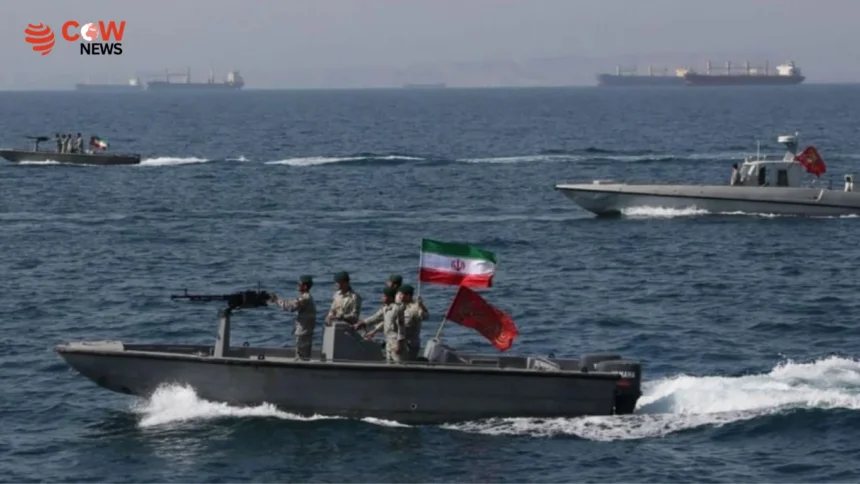
World ( The cow news digital ) Maritime traffic through the Strait of Hormuz has fallen to its lowest level in five weeks as rising tensions between the United States and Iran continue to disrupt commercial shipping in one of the world’s most strategically important waterways.
According to shipping analytics firm Kpler, only six vessels transited the Strait of Hormuz on Sunday, marking the lowest daily traffic recorded over the past five weeks. The decline comes as shipping companies adopt additional security measures following increased regional instability and concerns over the safety of commercial vessels operating in the Gulf.
Data cited by Reuters showed that two fully loaded oil tankers leaving the Gulf were carrying nearly two million barrels of Iranian crude oil along with approximately 500,000 barrels of refined petroleum products from Kuwait. At the same time, three empty oil tankers entered the Gulf to load crude oil and other petroleum products for export.
Industry observers say the reduction in vessel movement reflects growing caution among shipping operators as geopolitical tensions continue to weigh on maritime trade. The Strait of Hormuz serves as a critical route for global energy supplies, with a significant share of the world’s oil exports passing through the narrow waterway each day.
Shipping data also indicated that many commercial vessels temporarily switched off their Automatic Identification System (AIS) transponders while transiting the Strait. The practice is increasingly being used to reduce the visibility of vessel movements in areas considered vulnerable to security threats. While such actions may improve operational security, they also reduce transparency for maritime monitoring authorities.
Market analysts warn that prolonged instability in the Gulf could affect global energy markets by increasing transportation risks and insurance costs. Although oil exports have continued, shipping companies are closely monitoring the security situation before making operational decisions.
Read more
- Pakistan, Taliban, and Afghanistan: The Complex Triangle of Influence
- Imran Khan and the Politics of Idolization
The latest decline in maritime traffic follows heightened military activity and ongoing diplomatic tensions between Washington and Tehran, prompting several international shipping firms to review their navigation strategies in the region.
Energy traders and maritime experts are expected to keep a close watch on developments in the Strait of Hormuz, as any further disruption could have wider implications for global oil supply chains, freight costs, and international trade.