
World ( The cow news digital ) Pyongyang: Belarusian President Alexander Lukashenko has presented a rifle as a gift to North Korean leader Kim Jong Un during a high-profile diplomatic meeting aimed at strengthening bilateral relations between the two countries.
According to international media reports, the visit marked President Lukashenko’s first official trip to North Korea. During the meeting, both leaders signed a friendship and cooperation agreement, signaling a renewed commitment to closer political, economic, and strategic ties.
The discussions reportedly focused on enhancing mutual cooperation and resisting external pressure from Western countries. Both sides expressed agreement on expanding collaboration in various sectors, while also emphasizing shared positions on international geopolitical issues.
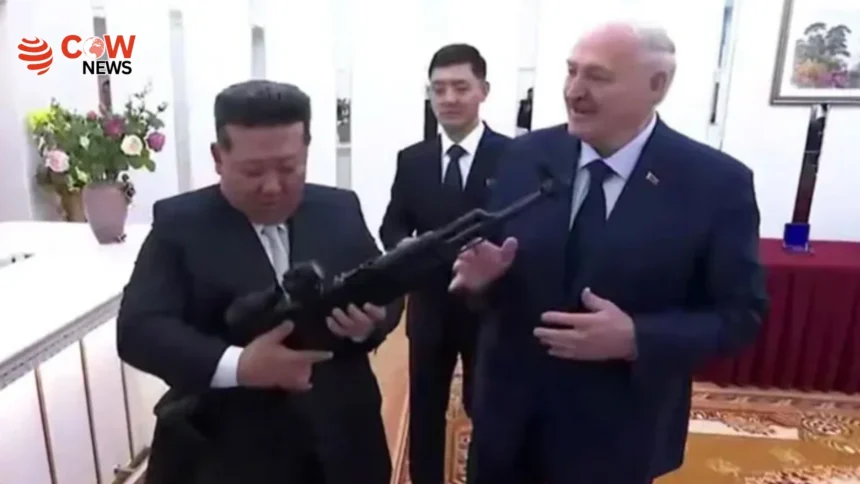
During the meeting, President Lukashenko reportedly presented Kim Jong Un with a rifle as a symbolic gift. While handing over the weapon, he made a light-hearted remark suggesting that it could be useful “if an enemy appears.” The exchange was described as informal and somewhat humorous, reflecting a rare moment of levity in an otherwise politically significant encounter.
Kim Jong Un accepted the gift with a smile and was seen examining the rifle’s mechanism, including its reloading system. The North Korean leader appeared engaged during the interaction, further highlighting the cordial tone of the meeting between the two leaders.
In return, Kim Jong Un presented Lukashenko with a sword and a decorative vase featuring the Belarusian president’s portrait. The reciprocal exchange of gifts underscored the diplomatic effort by both nations to reinforce symbolic friendship and mutual respect.
The meeting comes at a time when both Belarus and North Korea face extensive international sanctions and criticism over alleged human rights violations and their political alignments, particularly in relation to the ongoing conflict involving Russia and Ukraine.
read more
Analysts suggest that the strengthening of ties between Minsk and Pyongyang reflects a broader pattern of cooperation among countries isolated from Western diplomatic and economic systems. Such alliances are increasingly being framed as strategic partnerships based on shared geopolitical interests.
The agreement signed during the visit is expected to pave the way for further diplomatic engagement, although details of specific cooperation initiatives have not yet been fully disclosed.
As global tensions remain high, the meeting between Lukashenko and Kim Jong Un is being closely watched by international observers for its potential implications on shifting global alliances.