

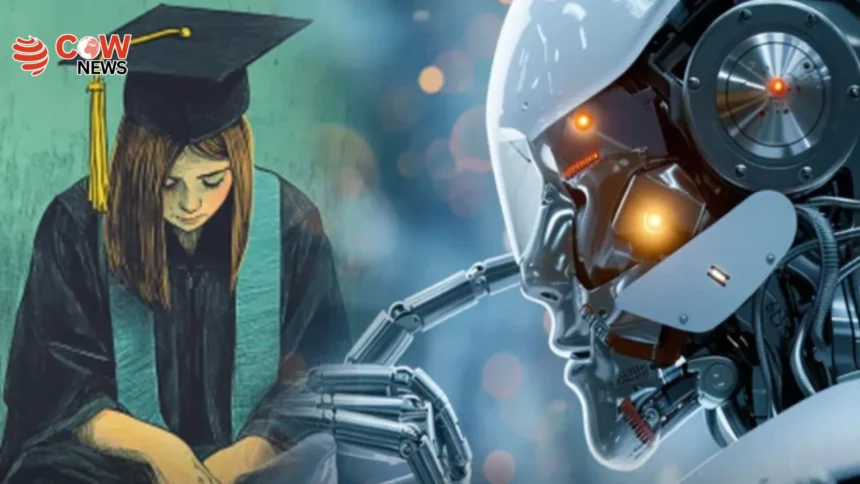
World ( The cow news digital ) Artificial Intelligence (AI) is rapidly transforming modern life, but alongside its benefits, it is also raising deep philosophical and ethical concerns about human thinking, autonomy, and decision-making.
In a reflective opinion piece, writer Dr. Obaid Ali compares today’s rapid technological evolution to a powerful unseen force, questioning whether artificial intelligence is becoming a modern-day “invisible influence” on human thought and behavior.
He recalls how, in earlier decades, fears and nightmares were often shared within families and resolved through reassurance and faith. In contrast, he argues that today’s concerns are shaped by technology that is far more complex and deeply integrated into everyday life.
According to the author, artificial intelligence is not just a tool for convenience but a system that increasingly influences human perception, choices, and reasoning. From recommendations on social media to automated decision-making systems, AI is becoming embedded in daily life in ways that may subtly shape how people think.
Dr. Obaid Ali raises an important question: whether humanity can preserve its mental independence or whether reliance on intelligent systems will gradually reduce human control over thought processes and decisions.
He emphasizes that the human mind is a unique and invaluable gift, responsible for creativity, moral judgment, and personal identity. According to him, over-dependence on machines for thinking and decision-making could weaken these essential human qualities over time.
The article suggests that while AI offers significant advantages in productivity, research, and problem-solving, it should always remain under human supervision. He advises that AI-generated suggestions should not be accepted blindly but should be critically evaluated and compared with human knowledge and experience.
Read more
- Trump Hopes Iran Talks Succeed, Warns Against Midnight Hammer
- US Envoy Backs Israel’s Claim to Wider Middle East
The writer also stresses the importance of using accurate, transparent, and real-time data when working with AI systems to avoid misinformation or distorted outcomes. He argues that human oversight is essential to ensure that technology remains a supportive tool rather than a controlling force.
Ultimately, the piece calls for balance: embracing artificial intelligence while preserving human judgment, intuition, and responsibility. The author concludes that while technology may assist in writing parts of the modern story, the final interpretation and direction of that story must remain in human hands.