
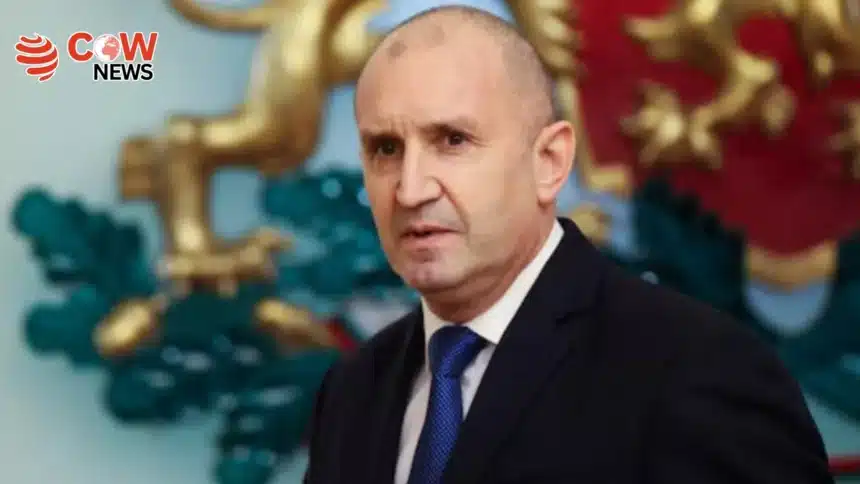
Bulgaria(The COW News Digital)Bulgaria’s President Rumen Radev has resigned, marking an unprecedented early departure from the office amid mounting political and public pressure. The resignation comes after attempts to form a new government failed, following weeks of widespread protests against alleged corruption and economic mismanagement.
According to news agencies, this is the first time in Bulgaria’s history that a sitting president has stepped down before completing the term. Radev had been engaged in negotiations with key political parties to establish a stable government, but those talks ultimately collapsed.
The resignation follows significant political turmoil in the country. Last month, citizens took to the streets in multiple cities, demanding accountability from the government over corruption allegations and controversial economic policies. The demonstrations, which lasted for several weeks, intensified after Bulgaria’s coalition partners withdrew support, leaving the government vulnerable.
Read More:
- UK and France Agree on Troop Deployment for Ukraine
- Trump Warns Iran, Says Response Does Not Mean Troop Deployment
Prior to Radev’s resignation, Prime Minister Rosen Zhelyazkov had also stepped down amid the unrest. Zhelyazkov resigned before a scheduled no-confidence vote could take place, citing public pressure and a loss of political backing. Observers say the dual resignations reflect the depth of the crisis and the fragility of Bulgaria’s current political system.
The protests focused heavily on grievances over tax increases and perceived attempts to mask corruption. Citizens expressed frustration that the government was failing to address rising economic challenges while allegedly shielding officials from accountability. The demonstrations were peaceful but persistent, showing a high level of public engagement and demand for reform.
In his statement, former Prime Minister Zhelyazkov emphasized that governmental legitimacy stems from public trust. “I believed the no-confidence motion against the government would fail,” he said, “but when citizens take to the streets, listening to their voice must always be our top priority.”
Political analysts suggest that Bulgaria will now face a period of uncertainty as interim leadership and new elections are considered. The resignations have prompted urgent consultations among political parties, as well as attention from international observers concerned about stability in the region.
The events in Bulgaria highlight the impact of sustained civic activism on governance and the importance of maintaining transparency and accountability. With both the presidency and prime ministership now vacant, the country faces a critical juncture that will determine the next government’s legitimacy and ability to implement reforms.