
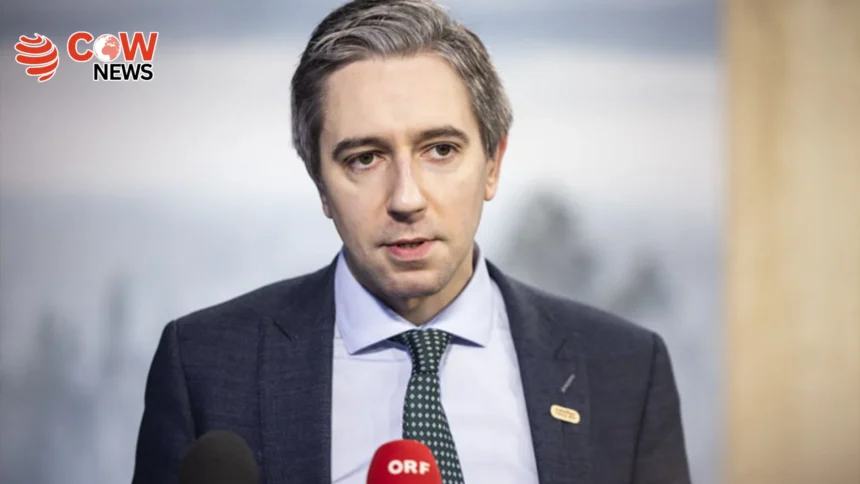
Ireland (The COW News Digital)Ireland has voiced strong reservations over the proposed Gaza Peace Board, with Deputy Prime Minister Simon Harris warning that the initiative shows signs of serious risk and divergence from its original mandate.
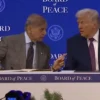
Speaking to media, Harris said Ireland is deeply concerned about the current direction of the peace board proposed under former US President Donald Trump’s initiative. He stated that what he observed during the signing ceremony differed significantly from the framework initially endorsed by the United Nations.
According to Harris, the UN-backed plan focused on establishing a board specifically tasked with monitoring and supporting peace efforts in Gaza. However, he said the latest proposals appear to have shifted away from that objective, raising questions about transparency and intent.
Read More:
- UK and France Agree on Troop Deployment for Ukraine
- Trump Warns Iran, Says Response Does Not Mean Troop Deployment
- Curfew Imposed in Nepal After Mosque Attack Sparks Unrest
“What we are now seeing does not reflect the original Gaza-focused peace plan,” Harris said. “In the current proposals, Gaza is barely mentioned, while the inclusion of figures such as Russian President Vladimir Putin introduces additional geopolitical complications.”
The Irish deputy prime minister stressed that such changes undermine confidence in the initiative and risk politicizing what was meant to be a neutral mechanism for conflict resolution. He added that Ireland is particularly concerned that the revised structure could weaken international consensus and sideline established multilateral processes.
Harris also questioned whether the peace board, in its current form, can effectively contribute to stability in Gaza. He noted that the lack of clarity around its mandate, membership, and oversight mechanisms makes it difficult for Ireland to justify participation.
“At this stage, we do not see a clear pathway for Ireland to become part of the peace board,” Harris said, adding that Dublin remains committed to peace efforts that are firmly rooted in international law and UN principles.
Ireland has consistently supported humanitarian access, ceasefire efforts, and a two-state solution to the Israeli-Palestinian conflict. Harris reiterated that any peace initiative must prioritize the protection of civilians and maintain a clear focus on Gaza’s humanitarian and security needs.
The comments come amid growing international debate over the structure and credibility of emerging peace mechanisms for Gaza. Several countries have called for greater clarity on how such initiatives align with existing UN-led frameworks.
Diplomatic observers say Ireland’s stance reflects broader concerns among some European states about initiatives that appear to bypass or dilute the role of the United Nations. As discussions continue, the future composition and mandate of the Gaza Peace Board remain uncertain.
For now, Ireland has signaled it will continue to support peace efforts through established multilateral channels while closely monitoring developments surrounding the proposed board.