

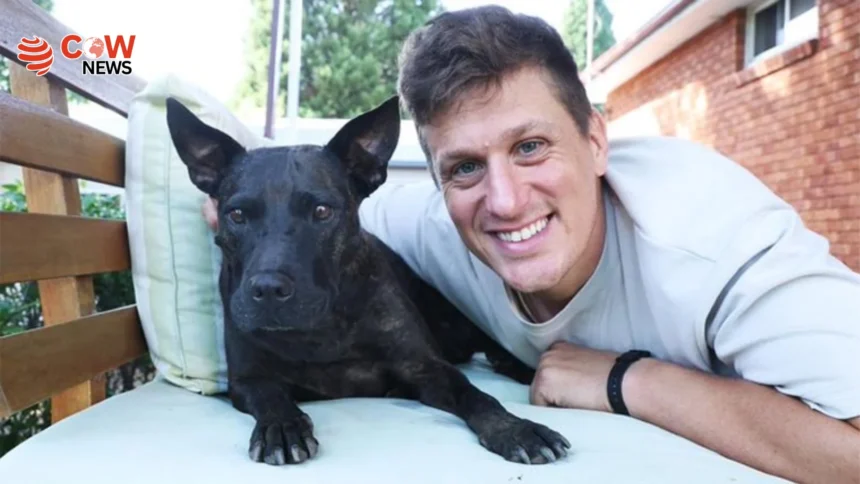
World ( The cow news digital ) Canberra — In a groundbreaking development, a resident of Sydney has used artificial intelligence (AI) to design an experimental cancer vaccine for his pet dog, offering new hope for veterinary medicine. The dog, named Rosie, had been diagnosed with a life-threatening tumor, and traditional treatments like surgery and chemotherapy had failed to halt its growth.
Paul Koningham, an IT professional with no formal background in biology or medicine, turned to AI tools, including ChatGPT, to explore potential treatment options. Using the AI, he designed a personalized mRNA vaccine aimed specifically at Rosie’s tumor.
To ensure accuracy, Paul invested approximately $3,000 to sequence Rosie’s DNA through the Ramaciotti Centre for Genomics at University of New South Wales. The scientists at the university were reportedly impressed by his data and assisted in producing and administering the experimental vaccine.
Within weeks of receiving the vaccine, Rosie’s largest tumor had shrunk by approximately 50 percent. Alongside the reduction in tumor size, the dog’s overall health and energy levels improved noticeably. While the tumor has not been completely eradicated, the results have been described as highly encouraging by researchers involved.
read more
- Imran Khan and the Politics of Idolization
- China Urges Global Support for Sustainable Sudan Solution
Experts emphasize that this is the first documented instance of a cancer vaccine being designed specifically for a dog using AI. The achievement not only provides a potential lifeline for pets suffering from serious illnesses but also opens new avenues for future cancer research.
Veterinary scientists suggest that AI-assisted vaccine design could revolutionize treatments for lethal diseases in animals and, potentially, humans. Personalized approaches like Paul’s could enable highly targeted therapies that minimize side effects and improve outcomes.
The case highlights the convergence of technology and medicine, demonstrating how AI can accelerate the development of novel treatments even outside traditional research settings. It also underscores the potential for pet owners and scientists to collaborate in innovative ways for life-saving interventions.
As AI applications expand in healthcare, this breakthrough offers hope that similar methods could be adapted for a variety of cancers in animals and eventually humans, marking a promising step toward personalized medicine.