
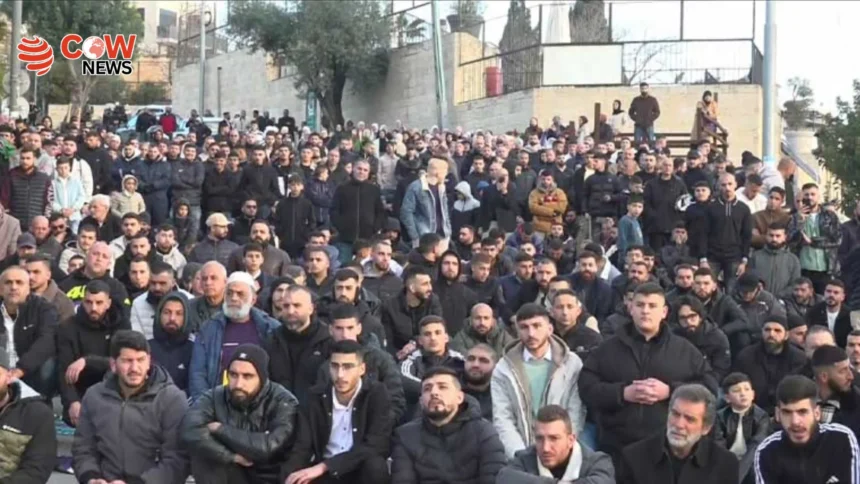
World ( The cow news digital ) Tensions escalated in Jerusalem as Israeli forces prevented Palestinians from performing Eid prayers at the sacred Al-Aqsa Mosque, drawing widespread condemnation from local communities and human rights observers.
Eyewitnesses reported that Israeli authorities deployed tear gas and conducted baton charges to restrict access to the mosque compound. Security forces closed key entrances and maintained a heavy presence, leaving many worshippers unable to enter the mosque. Palestinians were forced to perform prayers outside the compound under tense and chaotic conditions, leading to several injuries amid the crowd.
The incident comes during Eid al-Fitr, one of the holiest occasions in the Islamic calendar, a time traditionally marked by large gatherings for communal prayers. Local activists and observers described the actions of Israeli forces as an intentional disruption of religious practice, heightening frustration and resentment among Palestinians.
Analysts warn that restricting worshippers at Al-Aqsa could further inflame regional tensions, as the mosque remains a symbol of deep religious and political significance. The blockade of access to the holy site has historically sparked confrontations, with experts noting that such measures risk provoking wider unrest in the region.
Meanwhile, reports from Lebanon indicate that Israeli military operations continued on Eid, with airstrikes targeting several areas. Journalists covering the events were reportedly affected, highlighting ongoing concerns about civilian safety during periods of religious observance.
read more
Human rights organizations have condemned these restrictions, calling for unrestricted access to places of worship and respect for international laws protecting religious freedoms. Local leaders emphasized the importance of dialogue to prevent further escalation and to ensure peaceful observance of religious practices.
The Palestinian community continues to express outrage over what they describe as ongoing violations of their rights to worship freely. Social media and local media coverage have amplified accounts of the disruptions, bringing international attention to the situation and prompting statements from regional observers advocating restraint and the protection of sacred sites.
The developments underscore the complex and sensitive dynamics surrounding religious sites in contested areas, with both political and spiritual dimensions influencing day-to-day life. As Eid celebrations continue, authorities and communities face mounting pressure to navigate tensions without triggering broader conflict.